For musicians and bands, your domain name is your home base — the one URL you put on every flyer, merch item, and social bio. The simplest approach is your artist name or band name as a .com, and if that's taken, [bandname]music.com or [bandname]official.com are solid alternatives. Use FindMyURL to check what's actually available before you commit to a direction.
Why does a musician need their own domain name?
Social platforms come and go. MySpace collapsed. Bandcamp changed ownership. Algorithms shift, accounts get suspended, and URLs change without warning. A domain name you own is permanent — it belongs to you regardless of what any platform does.
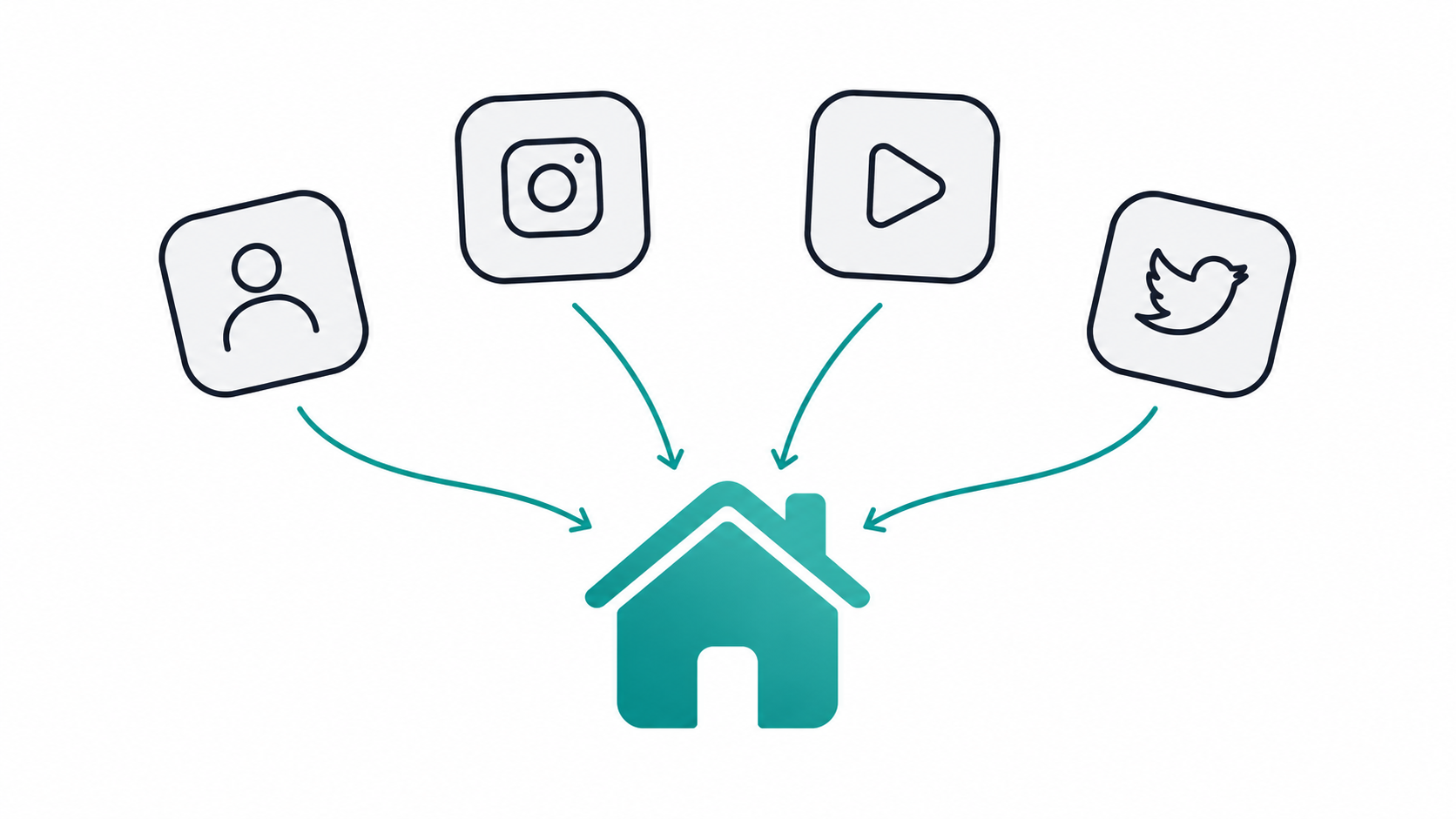
Your domain also serves as a hub that connects everything: streaming links, press kit, tour dates, merch store, and mailing list. Every follower you convert to an email subscriber via your own website is a fan you can reach directly, forever.
Practically speaking, yourband.com looks far more professional than linktr.ee/yourband on a poster, a CD insert, or a press release. Industry contacts — bookers, journalists, labels — take you more seriously when you have a proper web presence.
How should a solo artist choose their domain name?
You have three main options, each with a different trade-off:
| Format | Example | Best for |
|---|---|---|
[firstname][lastname].com |
elliotsmith.com |
Artists using their real name; long-term personal brand |
[stagename].com |
lorde.com |
Established stage name, ideally short and unique |
[stagename]music.com |
lordemusic.com |
When the bare stage name is taken |
Use your stage name, not your legal name, unless you perform under your real name. Fans search for what they hear, not what's on your passport.
If your stage name is a common word or phrase (think "The Weeknd" before he was famous), the bare .com may already be registered by someone else. In that case, append music, official, or your genre before checking alternatives.
Related: Should you use your own name as your domain? — a deeper look at personal branding vs. stage names for creative professionals.
What domain name should a band use?
Start with [bandname].com. If that's taken, work through this priority list:
[bandname]band.com[bandname]music.com[bandname]official.com[bandname][city].com— especially useful for local acts with a geographic identitythe[bandname].com— works if your name doesn't already start with "The"
Avoid buying a domain that closely mimics a more famous act. If a band called "Coldplay" already exists (they do), coldplayband.com creates confusion and potential trademark issues. Choose a direction that makes your name distinct.
If your band name is genuinely unavailable as a .com in any reasonable variation, that's a signal worth taking seriously — it may be time to reconsider the name before you build a brand around it.
Do different music genres have different domain name conventions?
Yes, and it's worth paying attention to what works in your scene:
- EDM / DJ artists tend toward short, brandable names — often a single word or invented name. Domains like
marshmello.comordeadmau5.comprioritise instant recognition. If you're a DJ, your stage name is your brand; use it as-is. - Folk, Americana, and singer-songwriters commonly use their full name.
annanalik.comorjonathanwilson.comsignal authenticity and personal artistry. - Metal and punk bands often lean into imagery with names that are unusual enough to be registrable — the distinctiveness that makes a metal name memorable also tends to make the domain available.
- Hip-hop artists frequently use a stage name that doubles as a brand. If your name is taken, a common move is appending your city or label:
[name][city].com.
The genre convention isn't a rule — it's a pattern that shapes audience expectations. Deviating from it isn't wrong, but be intentional about it.
Which domain extension is best for musicians — .com, .music, .band, or .fm?
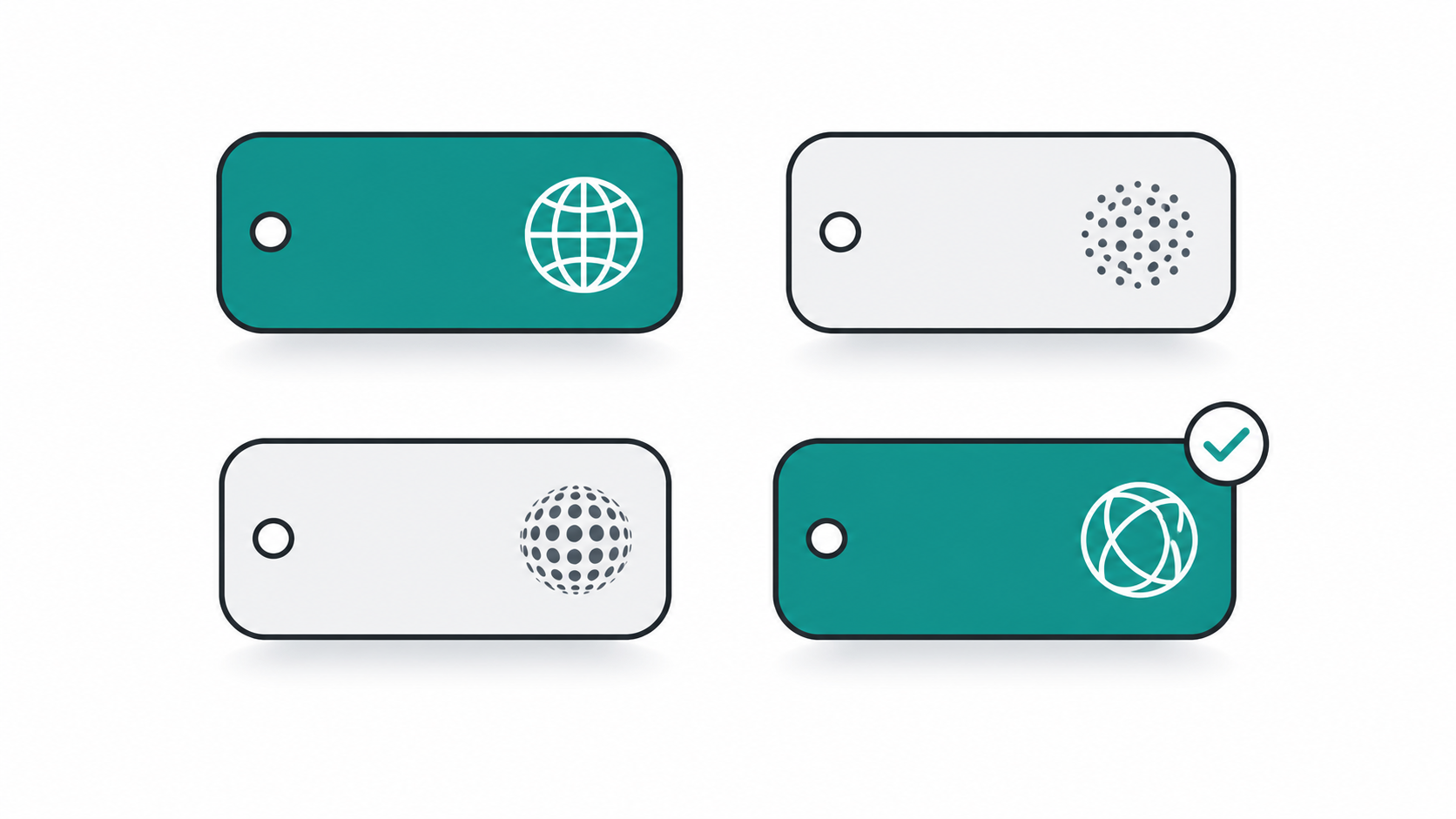
Here's a frank comparison of the main TLD options for musicians:
| Extension | Availability | Recognition | Verdict |
|---|---|---|---|
.com |
Competitive | Universal | Still the default — aim for this first |
.music |
Wide open | Low (still emerging) | Interesting, but risky for discoverability |
.band |
Wide open | Niche recognition | Works for bands; not ideal for solo artists |
.fm |
Moderate | Associated with radio/audio | Strong for podcasters and radio; less so for artists |
.co |
Moderate | Growing acceptance | Reasonable fallback if .com is taken |
The honest answer: get the .com if you possibly can. Audiences, journalists, and venue bookers default to typing .com. An unusual extension creates friction and costs you visitors.
That said, .music is a legitimate IANA-recognised TLD that's fully functional — it just hasn't reached mainstream recognition yet. If yourname.music is available and yourname.com is hopelessly taken, it's a defensible choice.
Related: What makes a good domain name? — covers TLD strategy in depth across all use cases.
What domain name mistakes should musicians avoid?
These are the patterns that create long-term problems:
- Numbers and hyphens —
the-band-name.comorband4life.comconfuses people hearing your URL spoken aloud. Avoid both. - Overly generic names —
thebandsite.com,mymusic.com, orofficialmusicpage.comhave no identity and are likely taken anyway. - Misspellings of your name — if fans can't spell it without prompting, your domain will be a constant source of lost traffic.
- Locking yourself into a moment —
[bandname]2024tour.comhas a built-in expiry date. Keep your main domain evergreen. - Registering only one variation — if your name is slightly ambiguous, consider registering common misspellings and redirecting them to your main domain.
- Using a registrar's free subdomain —
yourbandname.wixsite.comis not a real domain and does not belong to you. Always register your own.
What is an EPK domain and do musicians need one?
An Electronic Press Kit (EPK) is a dedicated page — or set of pages — for industry contacts: bookers, journalists, and labels. It typically contains your bio, high-resolution photos, press quotes, rider, and streaming links.
You don't necessarily need a separate domain for your EPK. A subdomain works well and keeps everything connected:
press.yourbandname.comepk.yourbandname.comyourbandname.com/epk
The subfolder approach (/epk) is simplest and keeps your site authority consolidated. A subdomain (press.yourbandname.com) makes sense if your EPK is hosted on a different platform or you want to give press contacts a clean, memorable URL to type.
What you should avoid is hosting your EPK on a third-party service with their domain in the URL. It looks temporary, which is the opposite of the impression you want to give industry professionals.
See also: How to find a domain name for a photography business — relevant if you're building a creative portfolio alongside your music career.
How do I find an available domain name for my music career?
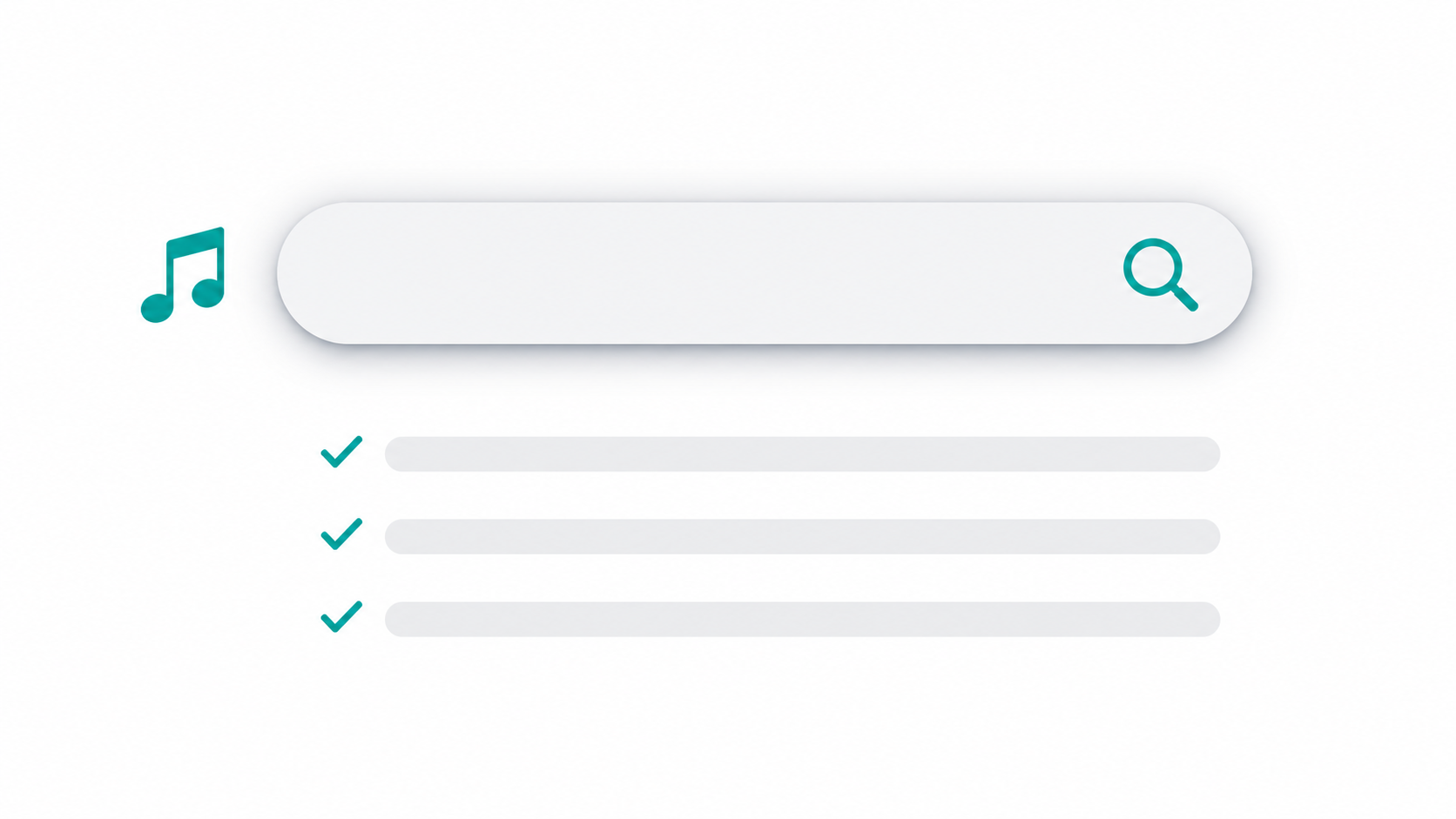
The traditional approach — typing variations into a registrar one by one — is slow and demoralising. Most obvious names are taken, and the process of discovering that manually wastes time you could spend making music.
FindMyURL uses AI to generate domain name variations and checks real-time availability across major domain registrars, so every suggestion you see is actually available to register right now.
Here's a practical workflow:
- Enter your artist name or band name into FindMyURL
- Review AI-generated variations — including appended words like
music,band,official, and genre terms - Filter by your preferred TLD (start with
.com) - Compare real-time availability and register directly through a registrar of your choice
This approach surfaces options you wouldn't think to try manually — including short variations, reversed word orders, and creative combinations that still clearly reference your name.
If you're building a full music website, Squarespace's music templates and Bandcamp's domain guidance offer structured starting points for the site itself, once your domain is secured.