To find an available .com domain in 2026, use an AI-powered domain generator that creates creative name combinations and checks availability in real time. With over 160 million .com registrations, manually searching for obvious names is a losing strategy. The best approach combines creative compound words, verb+noun combos, and AI-generated alternatives that surface options a human search would never find.
If you are searching for .com names available or dot com names available, the practical answer is the same: stop checking one exact phrase at a time and generate a wider shortlist of brandable .com options that are verified before you evaluate them.
Does It Feel Like Every Good .com Domain Is Already Taken?
That feeling is grounded in reality - but it's not the whole picture.
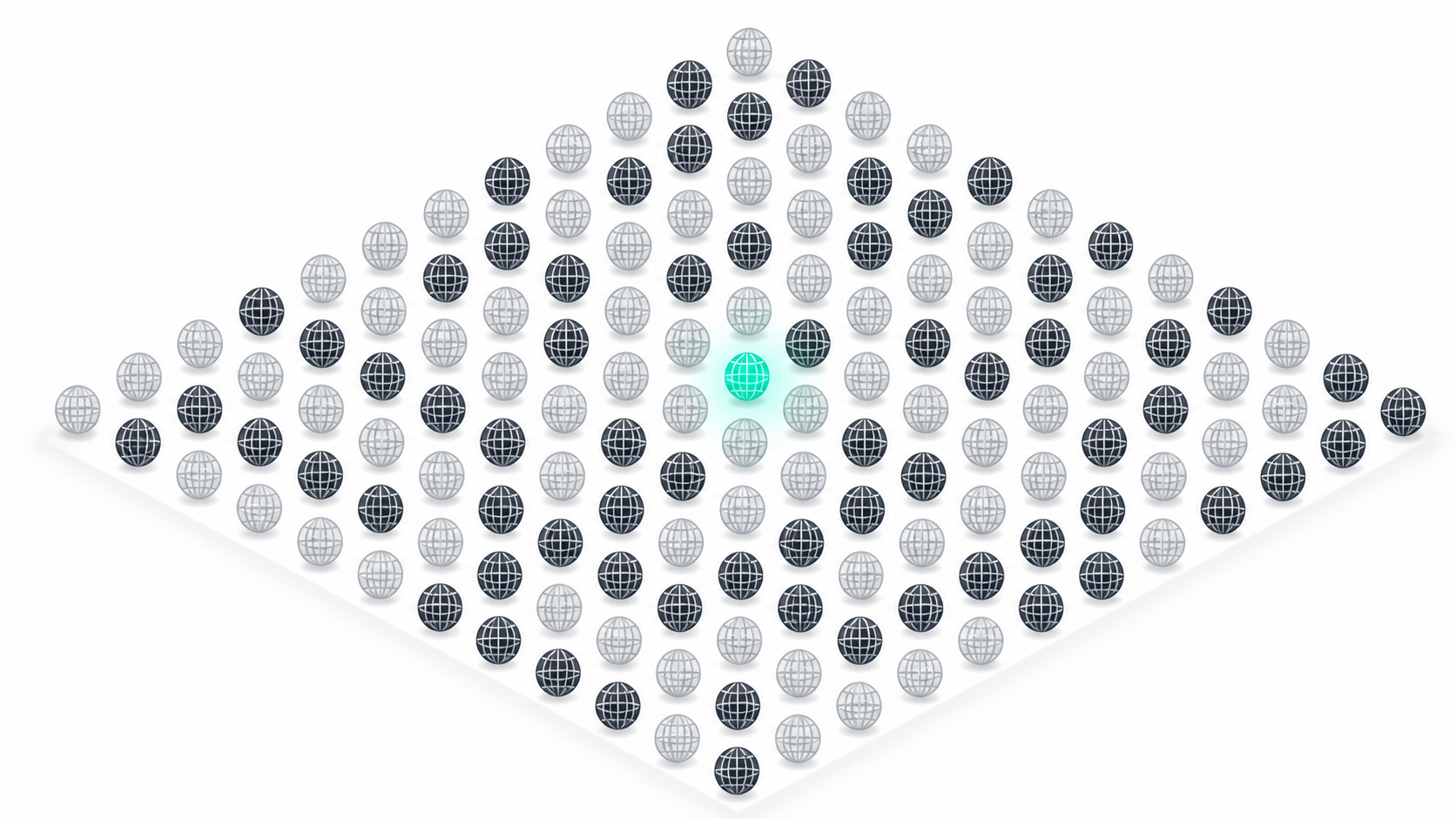
According to Verisign, the .com zone currently holds over 160 million registered domains. When you factor in that the average English word is just 5–6 characters, almost every simple, dictionary-word .com is gone. coffee.com, launch.com, store.com - taken decades ago.
But here's what most people miss: the domain namespace is not a finite list of words. It's a combinatorial space. The number of possible two-word combinations in the English language alone runs into the hundreds of millions. Most of those combinations have never been registered. The gap isn't a shortage of names - it's a shortage of creativity in how people search for them.
The problem isn't that good domains don't exist. The problem is that traditional search tools only check what you already thought of.
Why Do Traditional Domain Search Tools Fail?
Most domain search tools - registrar search bars, basic WHOIS checkers - operate on a single-input model: you type a name, they tell you if it's taken. That's it.
This creates a fundamental bottleneck: the tool is limited by your imagination. If you search launchpad.com and it's taken, the tool stops there. It won't suggest getlaunchpad.com, launchpadHQ.com, or rocketlaunchpad.com unless you think to try them yourself.
Tools like Nameboy and similar keyword mashers are a step up - they combine your input with a list of prefixes and suffixes. But they're still working from a fixed template. They can't reason about your brand, your audience, or the emotional tone of a name.
What actually works is AI-powered generation - a system that understands naming patterns, brand language, and availability simultaneously, then surfaces options you would never have considered.
For a broader comparison of search methods, read what is the best way to find an available domain name?. For a quality check before registering, use check if a domain name is good as your naming filter.
What Domain Naming Strategies Actually Work in 2026?
There are five proven strategies for finding a great available .com. Used in combination, they dramatically expand the number of options you'll find.
1. Creative Compound Words
Combine two short words into one invented word. This is how the most recognisable tech brands were built.
- Dropbox = Drop + Box
- Snapchat = Snap + Chat
- Facebook = Face + Book
- Mailchimp = Mail + Chimp
- Figma = Fig + Ma (partial word blend)
The trick is choosing words that relate to your product's action and outcome, not just its category. Aim for two syllables total where possible - it's more memorable.

2. Verb + Noun Combos
Action-first names feel dynamic and product-forward. They communicate what the product does before a user even clicks.
TrackMyShip.comBuildMyForm.comSendNotes.comFixMyLease.comGrowMyList.com
Verb + noun combinations in the 8–14 character range have far lower registration density than single words. Many excellent combinations remain unclaimed.
3. Prefix and Suffix Additions
Adding a functional prefix or suffix to a taken name is one of the fastest ways to find an available .com - and some of the best-known startups used exactly this technique.
Common prefixes:
get- GetRevue, Getaroundtry- TryBooker, TryNectaruse- UseProof, UseFathomwe- WeTransfer, WeWorkgo- GoCardless, GoSquared
Common suffixes:
HQ- MailerHQ, TaskHQapp- Notion initially used notion.so; many early-stage tools useapply- Bitly, Storifyify- Shopify, Clarify
These aren't workarounds - they're naming conventions that users understand and trust.
4. Invented or Blended Words
Portmanteau words - two words merged into one - give you trademark-friendly, highly available .coms.
Brunch= Breakfast + LunchPinterest= Pin + InterestSpotify= Spot + Identify (partially)Canva= Canvas (shortened)Asana= Sanskrit word repurposed
Inventing a word sounds risky, but it's actually the most available naming space in the entire .com namespace. There are no prior claims, no brand confusion, and the domain is almost certainly free.
5. Let AI Find the Gaps You Can't See
This is the strategy that changes the game in 2026. AI models trained on brand naming patterns, linguistic rules, and cultural associations can generate hundreds of plausible, brand-ready names in seconds - and immediately check whether each one is available.
FindMyURL uses AI to generate domain names and checks real-time availability across major domain registrars, so every suggestion you see is actually available to register right now.
That single feature eliminates the most frustrating part of domain searching: falling in love with a name, only to discover it's been parked since 2003.
This also helps when your search intent is more general, such as url search available or check in domain availability: the useful result is not just a status lookup, but a list of names that are both available and worth using.
Are Good .com Domains Still Being Registered in 2024 and 2025?
Yes - and here are 10+ real examples of strong .com domains registered in the last two years that prove the namespace isn't exhausted:
| Domain | Pattern | Why It Works |
|---|---|---|
Composio.com |
Invented word | Memorable, tech-credible |
Framer.com |
Single noun | Action-implied, clean |
Ditto.com |
Common word, new context | Short and sticky |
Rippling.com |
Verb-form noun | Dynamic, implies movement |
Runway.com |
Single noun, recontextualised | Visual, aspirational |
Linear.com |
Adjective-as-brand | Simple, developer-facing |
Loom.com |
Single noun | Short, memorable |
Pitch.com |
Single verb/noun | Perfectly describes the product |
Clerk.com |
Single noun, new context | Functional, clear |
Resend.com |
Verb with prefix | Action-oriented, product-literal |
Turso.com |
Invented word | Short, distinctive |
Supabase.com |
Compound portmanteau | "Super" + "base" |
Every one of these was available at some point in the past five years. The pattern is consistent: creative naming, not keyword grabbing, is what finds available .coms.
How Does AI-Powered Domain Search Actually Work?
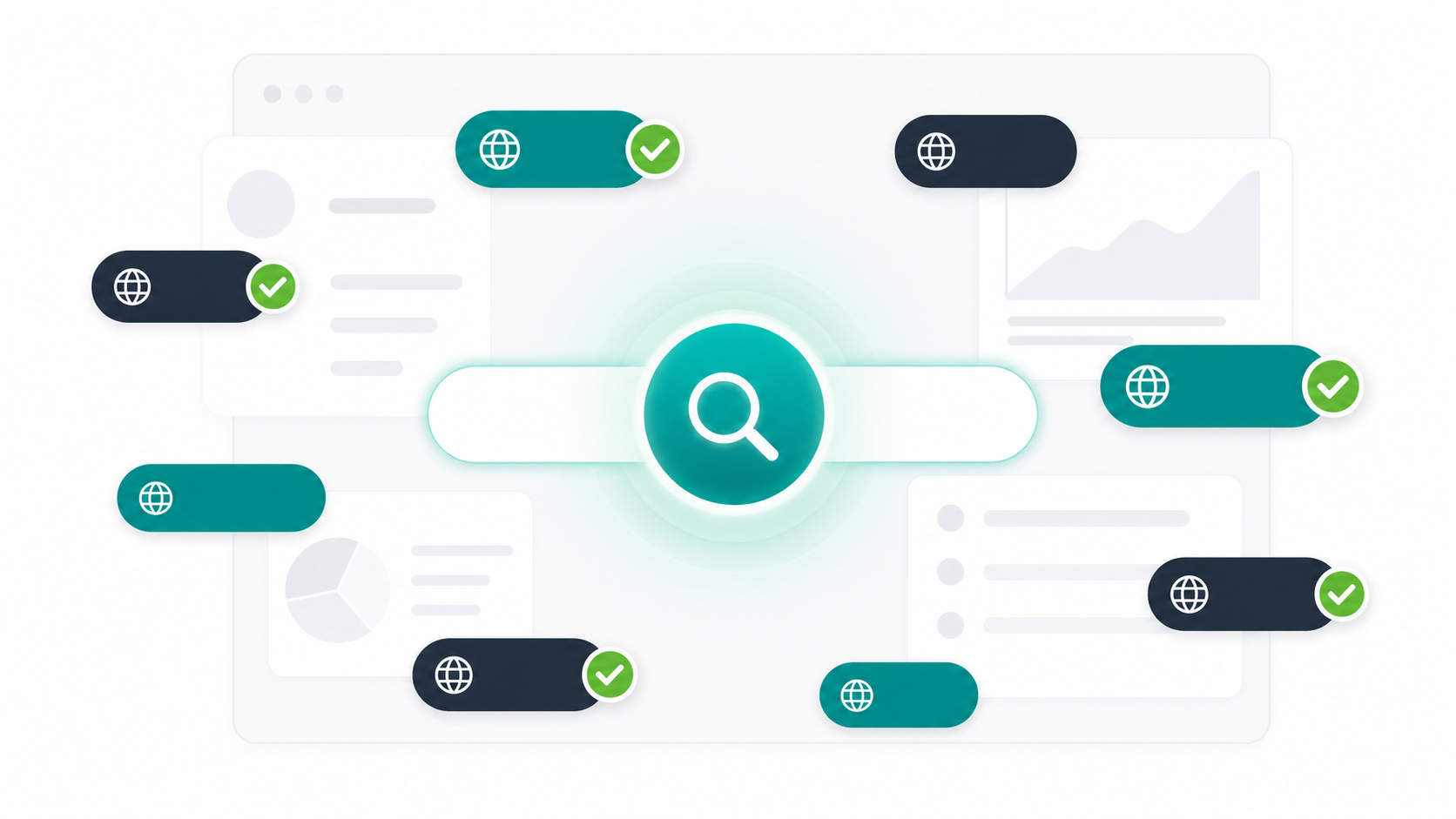
A traditional domain registrar's search checks one name at a time against a WHOIS database. You enter launchpad.com, it queries the registry, returns a result. That's a lookup tool, not a generation tool.
An AI-powered domain finder like FindMyURL works differently:
- You describe your business - what it does, who it's for, the feeling you want to convey
- The AI generates name candidates - using patterns from thousands of successful brand names, linguistic combinations, and tone-matching
- Availability is checked in real time - every name is verified before it's shown to you
- You only see available options - no wasted time on names that are already taken
The result is a fundamentally different experience: instead of typing guesses until something isn't taken, you receive a curated shortlist of genuinely available names that fit your brand.
You can verify any domain's registration status independently using DomainTools WHOIS - but with FindMyURL, that step is already done for you.
What Is the Step-by-Step Process for Finding an Available .com?
Here's a practical workflow for finding a great available .com domain in 2026:
Step 1: Define your naming criteria Write down three things: the core action your product performs, the feeling you want the name to convey, and any words that are off-brand or already taken in your space.
Step 2: Generate candidates with AI Use an AI domain generator - not a registrar's search bar. Describe your business in plain language and let the tool generate options. Aim for a list of 20–30 candidates before evaluating.
Step 3: Filter by length and memorability Prioritise names under 12 characters. Avoid hyphens, numbers, and double letters that create spelling confusion. Check that the name passes the "radio test" - can you hear it and spell it without seeing it written?
Step 4: Check trademark availability A domain being available doesn't mean the name is legally clear. Run a quick search on your country's trademark register before committing. For US brands, use the USPTO database.
Step 5: Register immediately Domain availability can change within hours. Once you find a name you like that's available, register it before you lose it.
Should You Consider Alternatives to .com?
If you're building a global consumer brand, .com remains the strongest choice - it carries the highest user trust and the fewest geographic assumptions. But it's not the only credible option in 2026.
Legitimate alternatives worth considering:
- .io - Widely accepted in tech, especially developer tools and SaaS. Used by Linear, Notion (historically), and many prominent startups.
- .co - Clean, short, globally understood. Used by AngelList (angel.co) and others.
- .ai - Extremely credible for AI-focused products. High demand has pushed prices up, but strong signal value.
- .app - Google-backed TLD with HTTPS enforced. Good for mobile-first products.
- .dev - Popular in developer tooling.
The honest advice: get the .com if you can. If a great .com is genuinely unavailable or priced out of reach, a category-relevant TLD like .ai or .app is a defensible second choice - not a fallback.
For a full breakdown of which extension fits your use case, see our guide to which domain extension you should choose.
Related Reading
- What makes a good domain name? - The principles behind names that stick
- How to find the perfect domain name for your startup - A deeper dive into startup naming strategy
- Why is every good domain name already taken? - The real reasons the namespace feels full
- What is a domain name generator? - How generation tools differ from search tools
Frequently Asked Questions
Are there any good .com domains left?
Yes. Obvious single-word .com domains are mostly gone, but strong names are still available when you use creative patterns: compound words, verb+noun combinations, prefix and suffix variations, and invented words. The namespace is not exhausted; it just rewards better searching.
How many .com domains are registered?
Verisign reports more than 160 million registered .com domains. That makes simple dictionary-word searches difficult, but it still leaves a huge number of useful combinations that are not registered yet.
How do I find a .com domain that is not taken?
Start with clear naming criteria, then generate a wide shortlist instead of checking one guess at a time. AI-powered domain search can help by creating brandable candidates and checking availability immediately, so you only spend time evaluating names you can actually register.
What are the best alternatives if the .com is taken?
For tech and software products, .io, .app, .ai, .co, and .dev can all be credible alternatives. Choose the extension that matches your audience and product category. For broad consumer businesses, a clean .com is still the strongest option when you can get one.
Is it worth paying extra for a premium .com domain?
Sometimes, but not by default. A premium .com can make sense for a funded business in a high-value category, but most early-stage projects are better served by a memorable available .com at standard registration cost. Brand fit and clarity matter more than owning a generic expensive domain.