For a SaaS product, choose a domain that's short (users type it daily), brandable (single real words, compound words, or invented words work best), and available as a .com - though .io and .app are widely accepted in tech. Also check if the matching npm/PyPI package name, GitHub org, and social handles are available. Your domain isn't just an address - for a SaaS product, it is the product.
Why is SaaS domain naming different from other businesses?
For most businesses, a domain name is a marketing asset. For a SaaS product, it's the core interface. Your users type it every day, share it in Slack messages, write it in internal documentation, and paste it into procurement forms. That changes the calculus entirely.
Three things make SaaS naming uniquely demanding:
- The domain is the product. There's no physical storefront, no packaging, no sales rep handing out cards. The URL is the first impression.
- Short domains reduce churn friction. The more effort it takes to navigate to your product, the more cognitive load users carry. A short, memorable domain reduces that load.
- Technical audiences accept newer extensions. Developers and founders know that
.ioand.appare legitimate. You're not limited to.comif the right name is available elsewhere - though.comstill carries authority with enterprise buyers and non-technical stakeholders.
For a broader foundation, read what makes a good domain name before diving into SaaS-specific strategy.
What are the proven naming patterns for SaaS products?
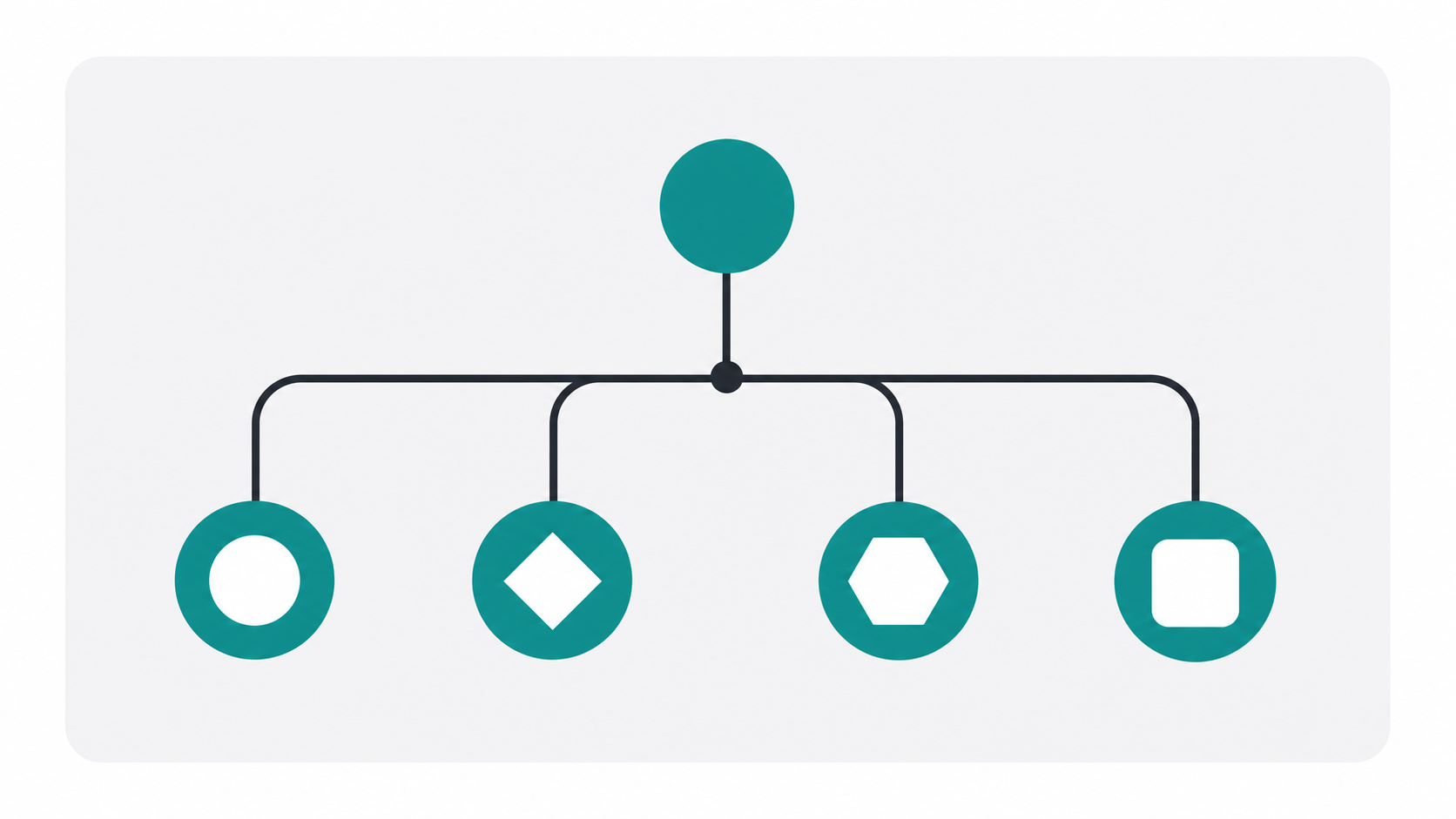
Great SaaS names cluster into four patterns. Each has trade-offs.
Single real words
Examples: Notion, Slack, Linear, Loom, Craft, Pipe
Why it works: Instantly memorable, easy to spell, strong brand potential. One word carries enormous weight when the product lives up to it.
The problem: Almost every common English word is taken as a .com. You'll either need to get creative with extensions, pay a premium for the domain, or find an underused word.
Best for: Consumer-facing SaaS, tools with broad appeal, products where brand recognition matters most.
Compound words
Examples: Mailchimp, Salesforce, HubSpot, Intercom, Basecamp, Typeform
Why it works: Two words fused together create something new that's still descriptive. The combination often hints at what the product does while remaining ownable.
The problem: Longer than single words. Hyphenated versions are almost always a bad sign - if projectflow.com is taken and you're considering project-flow.com, keep looking.
Best for: B2B SaaS where a touch of descriptiveness builds trust with buyers.
Invented words
Examples: Figma, Asana, Trello, Zuora, Klaviyo, Miro
Why it works: Completely ownable. No trademark conflicts, no existing connotations to fight, and the domain is almost certainly available. Once the product takes off, the word becomes the category.
The problem: Invented words require more marketing investment to establish meaning. You can't rely on the word doing any descriptive work for you.
Best for: Well-funded startups, products targeting global markets (invented words often translate better), or founders with strong brand instincts.
Verb-based names
Examples: Zoom, Canva, Stripe, Convert, Render
Why it works: Verbs imply action, which is exactly what software does. "Let me Zoom you" became a sentence. That's brand moat.
The problem: Action words are competitive. Most are taken as .com.
Best for: Products where the primary value is a single transformative action (communicate, design, pay, deploy).
For more inspiration, see 50 creative domain name ideas for AI startups - many of the patterns apply directly to SaaS.
Should my SaaS use .com, .io, or .app?
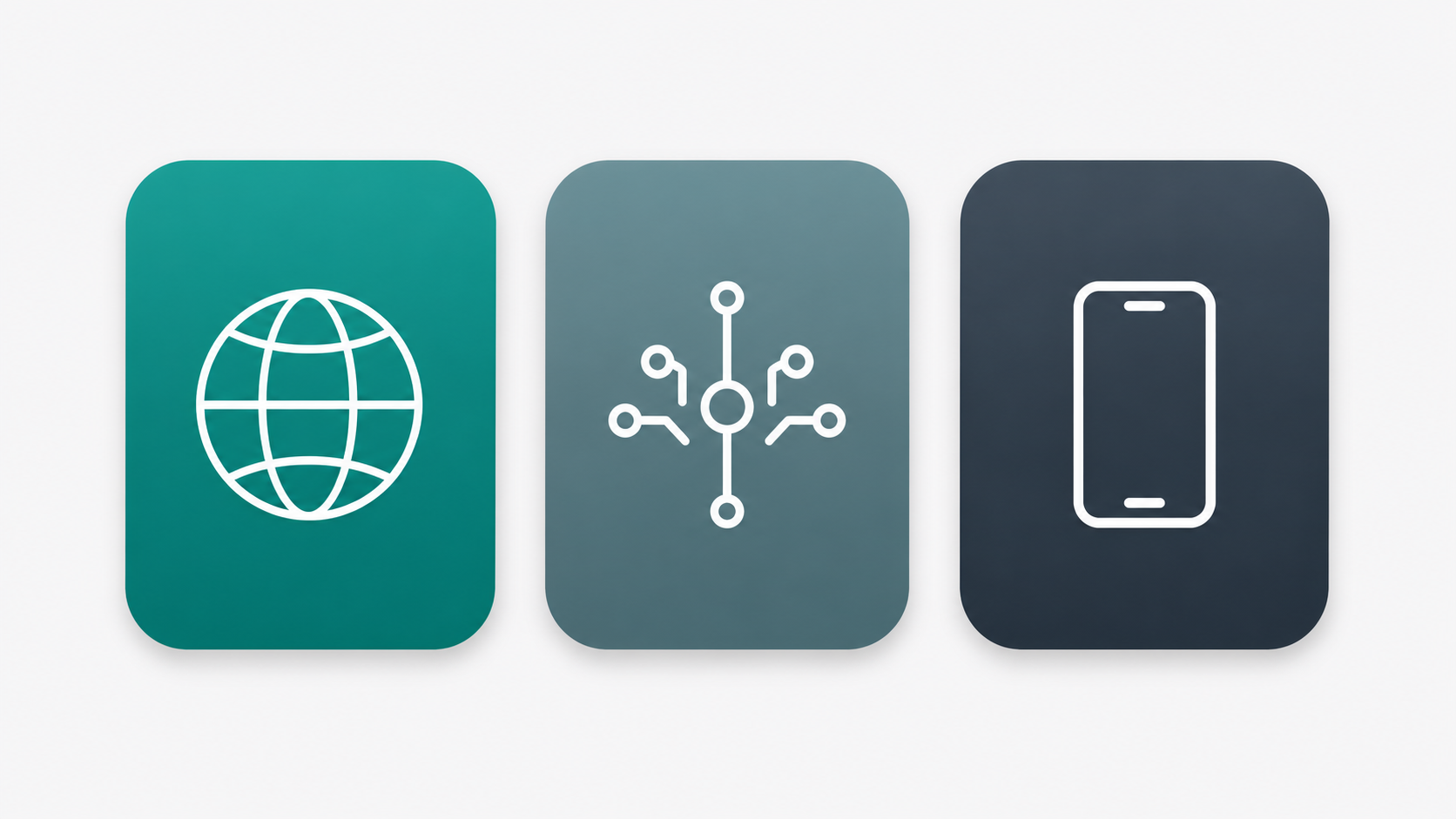
The extension question is one of the most debated in SaaS naming. Here's a practical breakdown:
| Extension | Best for | Perceived by |
|---|---|---|
.com |
Any SaaS, especially enterprise | Universal trust signal |
.io |
Developer tools, technical SaaS | Dev community standard |
.app |
Mobile-adjacent or consumer SaaS | Modern, tech-forward |
.ai |
AI-powered SaaS products | AI-native positioning |
.co |
Startups when .com is taken |
Acceptable but second choice |
The honest answer: If you can get a short, brandable .com, take it. If the .com is unavailable and the name is otherwise perfect, .io is broadly respected in the SaaS world - look at Linear, Vercel, and Railway. .app is growing in credibility. .ai is experiencing a surge of adoption as AI-native tools proliferate.
What you should avoid: hacking a word into a domain extension (e.g., del.icio.us-style domains). They were clever in 2006. Today they're confusing and hard to share verbally.
For a full breakdown of extension trade-offs, read which domain extension should I choose?
What technical checks should I run before committing to a SaaS name?
Most domain guides stop at "check if the .com is available." For SaaS, that's not enough.
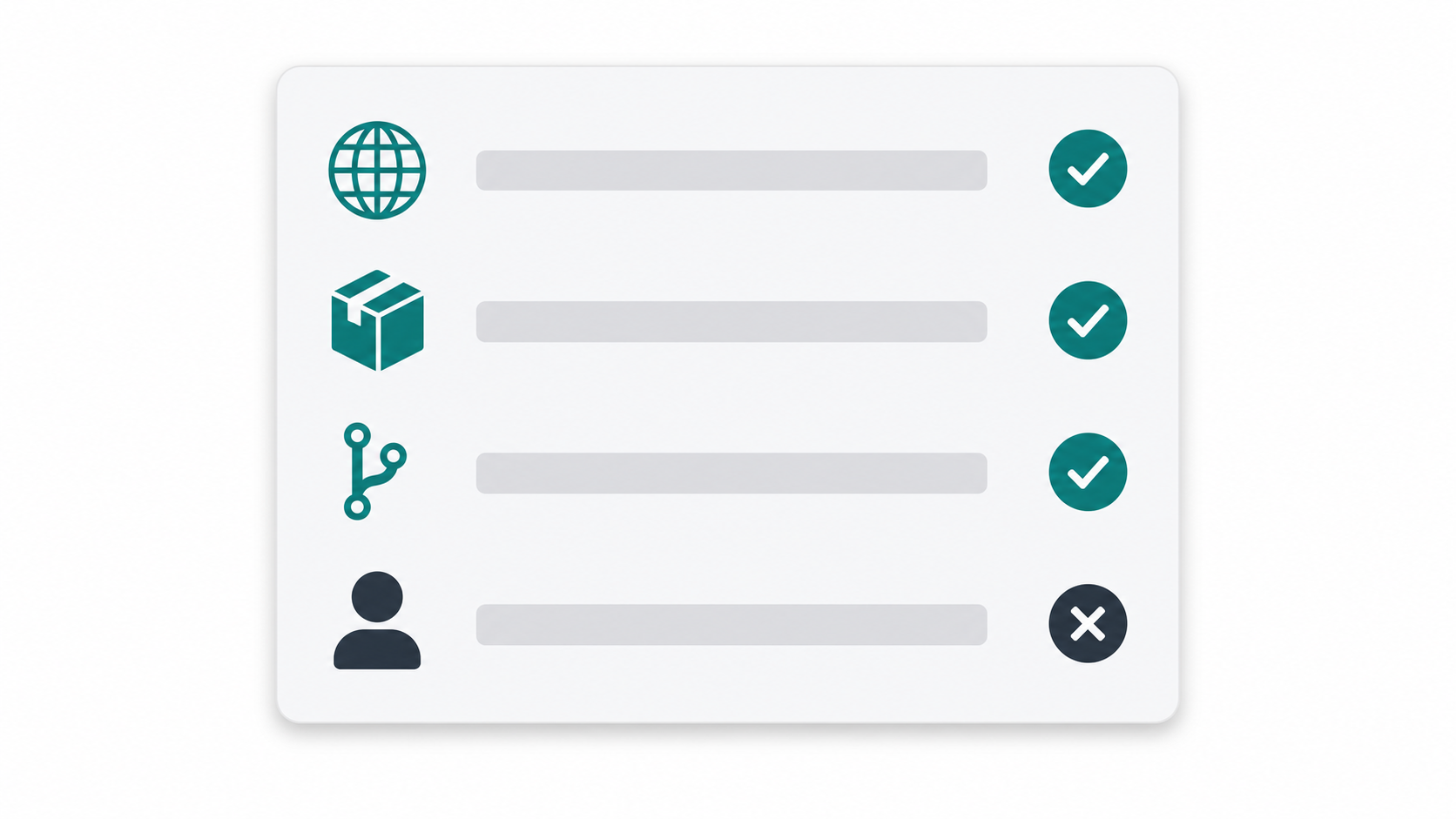
Run this full checklist before you commit:
Domain availability
-
.comavailable (or preferred extension) -
.ioavailable (even if not your primary) - No trademark conflicts (search USPTO and EU IPO)
Package registries
- npm package name available (
npmjs.com/package/yourname) - PyPI package name available (if Python-adjacent)
- RubyGems available (if relevant)
Developer infrastructure
- GitHub organisation name available (
github.com/yourname) - Docker Hub namespace available
Social handles
- Twitter/X handle available
- LinkedIn company page
- Product Hunt brand name
Subdomain structure
Think about how subdomains will work before you register. If your SaaS runs on app.yourname.com, you need a domain that doesn't look strange with that prefix. If you're building a multi-tenant product where each customer gets their own subdomain (customer.yourname.com), a shorter base domain is even more important.
FindMyURL uses AI to generate domain names and checks real-time availability across major domain registrars, so every suggestion you see is actually available to register right now.
How do I name a B2B SaaS product specifically?
B2B SaaS has its own naming dynamics. Your buyers are often different from your users. A VP of Finance approves the purchase; a junior analyst uses the tool daily. The name needs to work in a boardroom conversation and a developer's terminal.
Lean toward compound or invented words. Single real words can feel too casual for enterprise contexts. "Basecamp" sounds more substantial than "Camp." "Salesforce" carries authority that "Force" alone wouldn't.
Avoid puns or overly clever wordplay. What reads as witty in a Product Hunt launch post can create friction when procurement teams search for your vendor name in a legal agreement.
Check how the name sounds in a sentence. "We use [product] for our CRM" - say that out loud with your candidate names. Does it flow? Does it sound legitimate?
Consider category clarity vs. category creation. A descriptive name like "ReportingTool.io" helps buyers understand what you do immediately but gives you no room to expand. An invented name like "Metabase" tells you nothing on first encounter but becomes infinitely extensible as the product grows.
For broader startup naming strategy, see how to find the perfect domain name for your startup.
The SaaStr community has covered SaaS naming extensively from a go-to-market perspective - worth reading alongside domain strategy.
How do I use AI to generate SaaS domain name ideas?
Manual brainstorming hits a wall fast. Every good word is taken. Every compound feels forced. Every invented word sounds like a random syllable jumble.
AI generation changes the workflow. Instead of thinking of names and then checking availability, you can describe your product's core value - what it does, who it's for, what feeling it should evoke - and generate a large batch of candidates that are shaped by language patterns from thousands of existing brand names.
The practical advantages:
- Volume without fatigue. Generate 50 candidates in the time it takes to think of five.
- Pattern diversity. AI can explore single words, compounds, invented words, and verb-based names simultaneously.
- Availability filtering. The most useful tools check availability in real time, so you only see names you can actually register.
FindMyURL is built specifically for this workflow. Describe your SaaS product, select the naming style you prefer, and get AI-generated suggestions with live availability checks across registrars.
For a deeper look at this approach, read how to find a brandable domain name using AI.
The Indie Hackers community is also a useful resource for seeing how other founders approached naming - search the forums for naming threads and you'll find dozens of real-world case studies.
What are examples of great SaaS domain names and why do they work?
Dissecting what's already working is one of the fastest ways to calibrate your instincts.
| Name | Pattern | Why it works |
|---|---|---|
| Notion | Single real word | Evokes ideas and organisation without being literal |
| Figma | Invented word | Short, distinct, no competitors, fully ownable |
| Linear | Single real word | Implies speed and direction - perfect for a project tool |
| Stripe | Single real word | Clean, minimal, implies a path - suits a payments company |
| Intercom | Compound word | Two-way communication implied directly in the name |
| Asana | Invented word | Has a calm, focused connotation even before you know the product |
| Loom | Single real word | Multiple meanings (to weave, to appear suddenly) - both relevant |
| Vercel | Invented word | Technical-sounding without being jargon |
Notice what most of these have in common: they're short (one or two syllables), they have .com or a widely respected extension, and none of them try to describe every feature the product has. The best SaaS names leave room for the product to define them.
Summary: The SaaS domain naming checklist
- Aim for 1–2 syllables - 6–10 characters is the sweet spot
- Choose a naming pattern - single word, compound, invented, or verb-based
- Prioritise
.com, accept.ioor.appfor the right name - Check the full technical stack - npm, GitHub, social handles
- Test subdomain usability - how does
app.yourname.comsound? - Run trademark searches before investing in branding
- Use AI generation to escape the blank-page problem and check availability in real time
Start searching on FindMyURL →
Frequently Asked Questions
What makes a good SaaS domain name? A good SaaS domain name is short, easy to spell and say aloud, available as a .com or respected tech extension like .io or .app, and free from trademark conflicts. It should also have matching availability on GitHub, package registries, and key social handles.
Should my SaaS use .com or .io? Use .com if you can get a short, brandable name. It carries the most universal trust, especially with enterprise buyers. If .com is unavailable, .io is widely accepted in the developer and SaaS community. .app is also credible for modern SaaS tools.
How do I name a B2B SaaS product? For B2B SaaS, favour compound or invented words over casual single words. Avoid puns or overly clever names that may not translate well in enterprise procurement contexts. Test how the name sounds in a sentence like "We use [product] for our workflow" to ensure it carries authority.
What are examples of great SaaS domain names? Strong examples include Notion, Figma, Linear, Stripe, Intercom, Asana, Loom, and Vercel. These names share key traits: short, distinct, free of descriptive baggage, and capable of growing into their own category over time.
Should my SaaS name be a real word or invented? Both approaches work. Real words are immediately memorable and easy to spell, but most good ones are taken as .com domains. Invented words are fully ownable and trademark-friendly, but require more marketing investment to build meaning. Your budget, market, and brand ambition should guide the choice.