{
  "@context": "https://schema.org",
  "@graph": [
    {
      "@type": "Article",
      "@id": "https://findmyurl.app/blog/anatomy-of-a-perfect-dot-com",
      "headline": "The anatomy of a perfect .com: what separates good from great domain names",
      "description": "A definitive scoring framework for evaluating domain names across 10 dimensions — with case studies on Google, Stripe, Figma, Notion, and Linear.",
      "url": "https://findmyurl.app/blog/anatomy-of-a-perfect-dot-com",
      "publisher": {
        "@type": "Organization",
        "name": "FindMyURL",
        "url": "https://findmyurl.app"
      },
      "keywords": ["perfect domain name", "what makes a great .com", "ideal domain name"]
    },
    {
      "@type": "HowTo",
      "name": "How to score a domain name",
      "description": "A 10-dimension framework for evaluating domain name quality",
      "step": [
        { "@type": "HowToStep", "name": "Score Length", "text": "Award 10 points for 6–9 characters, 8 for 10–12, 5 for 5 or fewer, 3 for 13+." },
        { "@type": "HowToStep", "name": "Score Pronounceability", "text": "Can a stranger say it correctly on first sight? 10 = instant, no hesitation." },
        { "@type": "HowToStep", "name": "Score Spellability", "text": "Apply the radio test. If someone hears it once and types it correctly, score 10." },
        { "@type": "HowToStep", "name": "Score Memorability", "text": "After one exposure, can someone recall it 10 minutes later? Test it on a friend." },
        { "@type": "HowToStep", "name": "Score Brandability", "text": "Does it feel like a company name, not a keyword phrase? Invented words score high." },
        { "@type": "HowToStep", "name": "Score Evocativeness", "text": "Does it suggest the right emotion, category, or benefit without being literal?" },
        { "@type": "HowToStep", "name": "Score TLD Strength", "text": ".com = 10. Country codes and category TLDs score lower depending on your target market." },
        { "@type": "HowToStep", "name": "Score Trademark Clearance", "text": "Search USPTO/IPO. No conflicts = 10. Possible conflicts = risk. Taken = 0." },
        { "@type": "HowToStep", "name": "Score Social Handle Availability", "text": "Check the exact handle on X, Instagram, and LinkedIn. All available = 10." },
        { "@type": "HowToStep", "name": "Score International Usability", "text": "Does it have offensive meanings in major languages? Is it pronounceable globally?" }
      ]
    },
    {
      "@type": "FAQPage",
      "mainEntity": [
        {
          "@type": "Question",
          "name": "What is the perfect length for a domain name?",
          "acceptedAnswer": {
            "@type": "Answer",
            "text": "The ideal domain name length is 6–12 characters. Shorter names (under 5 characters) are almost never available as .coms; longer names (13+) hurt memorability and are harder to type accurately. The sweet spot — where availability, memorability, and usability intersect — is 6–9 characters."
          }
        },
        {
          "@type": "Question",
          "name": "What is the radio test for domain names?",
          "acceptedAnswer": {
            "@type": "Answer",
            "text": "The radio test asks: if someone heard your domain name spoken aloud — on a podcast, radio ad, or in conversation — could they type it correctly into a browser on the first attempt, with no spelling clarification? A domain that fails this test will cost you traffic and erode word-of-mouth marketing."
          }
        },
        {
          "@type": "Question",
          "name": "How do I know if my domain name is good?",
          "acceptedAnswer": {
            "@type": "Answer",
            "text": "Score it across ten dimensions: length, pronounceability, spellability, memorability, brandability, evocativeness, TLD strength, trademark clearance, social handle availability, and international usability. A total score of 75 or above out of 100 indicates a strong domain. Stripe, for example, scores approximately 88/100."
          }
        },
        {
          "@type": "Question",
          "name": "What is a brandable domain name?",
          "acceptedAnswer": {
            "@type": "Answer",
            "text": "A brandable domain name is one that functions as an ownable, distinctive identity — not a generic keyword string. It may be an invented word (Figma, Zapier), a real word used in an unexpected context (Stripe, Notion), or a compressed compound (YouTube, Snapchat). Brandable names are trademarkable, emotionally resonant, and category-agnostic enough to grow with a business."
          }
        },
        {
          "@type": "Question",
          "name": "How do I score my domain name idea?",
          "acceptedAnswer": {
            "@type": "Answer",
            "text": "Use the 10-dimension scorecard in this article. Rate each dimension from 1–10, total the score out of 100, and use this benchmark: 85–100 = exceptional, 70–84 = strong, 55–69 = usable with trade-offs, below 55 = reconsider. No domain scores 100 — the goal is to understand your trade-offs before committing."
          }
        }
      ]
    }
  ]
}
The anatomy of a perfect .com: what separates good from great domain names
A perfect .com domain is 6–12 characters, uses real or invented English words with no hyphens or numbers, passes the radio test (someone who hears it can type it correctly on the first attempt), is trademarkable, evokes the right emotion or category, and has matching social handles available. No single domain ticks every box perfectly — but the closer you get, the more it's worth.
This article is a definitive synthesis of everything that makes a domain name exceptional. It gives you a 10-dimension scorecard you can apply to any name idea, case studies on five iconic domains, and a framework for understanding your trade-offs before you register anything.
Why does a domain name matter more than most founders think?
Your domain name is one of the few brand assets that appears in every context simultaneously: browser tabs, email addresses, printed receipts, podcast ads, business cards, investor decks, and word-of-mouth conversations. Unlike a logo, it can't be redesigned cheaply. Unlike a tagline, it can't be quietly retired.
A weak domain compounds problems over time. It leaks word-of-mouth traffic (people mistype it), it undermines brand credibility (generic keyword domains feel provisional), and it creates legal exposure (if you haven't cleared trademark, you may be forced to rebrand after launch).
A strong domain does the opposite. It travels well verbally, sticks in memory after a single exposure, and signals that a real company stands behind the product.
If you haven't read our foundational piece on what makes a good domain name, start there. This article builds directly on those principles.
What are the 10 dimensions of a great domain name?
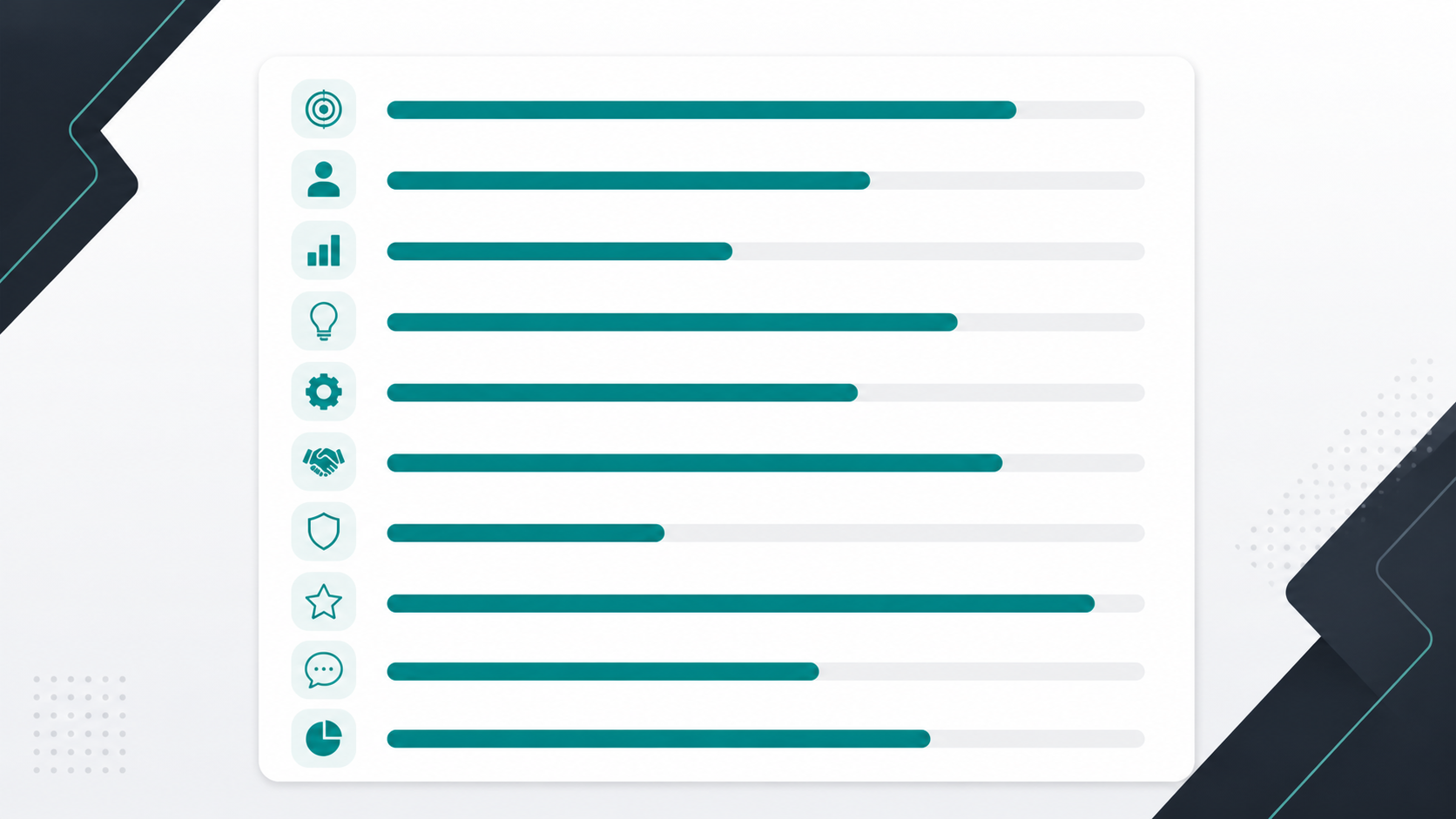
Every great domain name can be evaluated across ten independent dimensions. Score each from 1–10, total out of 100, and use this benchmark:
| Score | Interpretation |
|---|---|
| 85–100 | Exceptional — register immediately |
| 70–84 | Strong — minor trade-offs worth accepting |
| 55–69 | Usable — be clear about what you're sacrificing |
| Below 55 | Reconsider — likely to create problems at scale |
Let's examine each dimension.
1. Length — how many characters is ideal?
Score 10 for 6–9 characters. Score 8 for 10–12. Score 5 for 5 characters or fewer. Score 3 for 13 or more.
Short domains are memorable and fast to type — but sub-5-character .coms are almost entirely taken or priced in six figures. The 6–9 character range is the practical sweet spot where quality, availability, and registrability intersect.
Our deeper analysis of how long a domain name should be covers the data behind these thresholds.
Hard rules:
- No hyphens. They break the radio test instantly ("is that with a hyphen?").
- No numbers. They create ambiguity ("is that the numeral 4 or the word four?").
- No double letters that create confusion (e.g., flickr was strategic; flikkr would be a mess).
2. Pronounceability — can a stranger say it on first sight?
Score 10 if the pronunciation is unambiguous on first reading. Score 5 if it requires a second attempt or an explanation. Score 1 if the company itself has to tell people how to say it.
This matters most for enterprise sales, conference presentations, and any context where your brand is spoken aloud before it's seen in writing. If your sales team is saying "it's pronounced..." on every call, you have a problem.
Test: email five people who haven't seen the name. Ask them to say it aloud in a voice message. If you get five different pronunciations, rethink.
3. Spellability — does it pass the radio test?
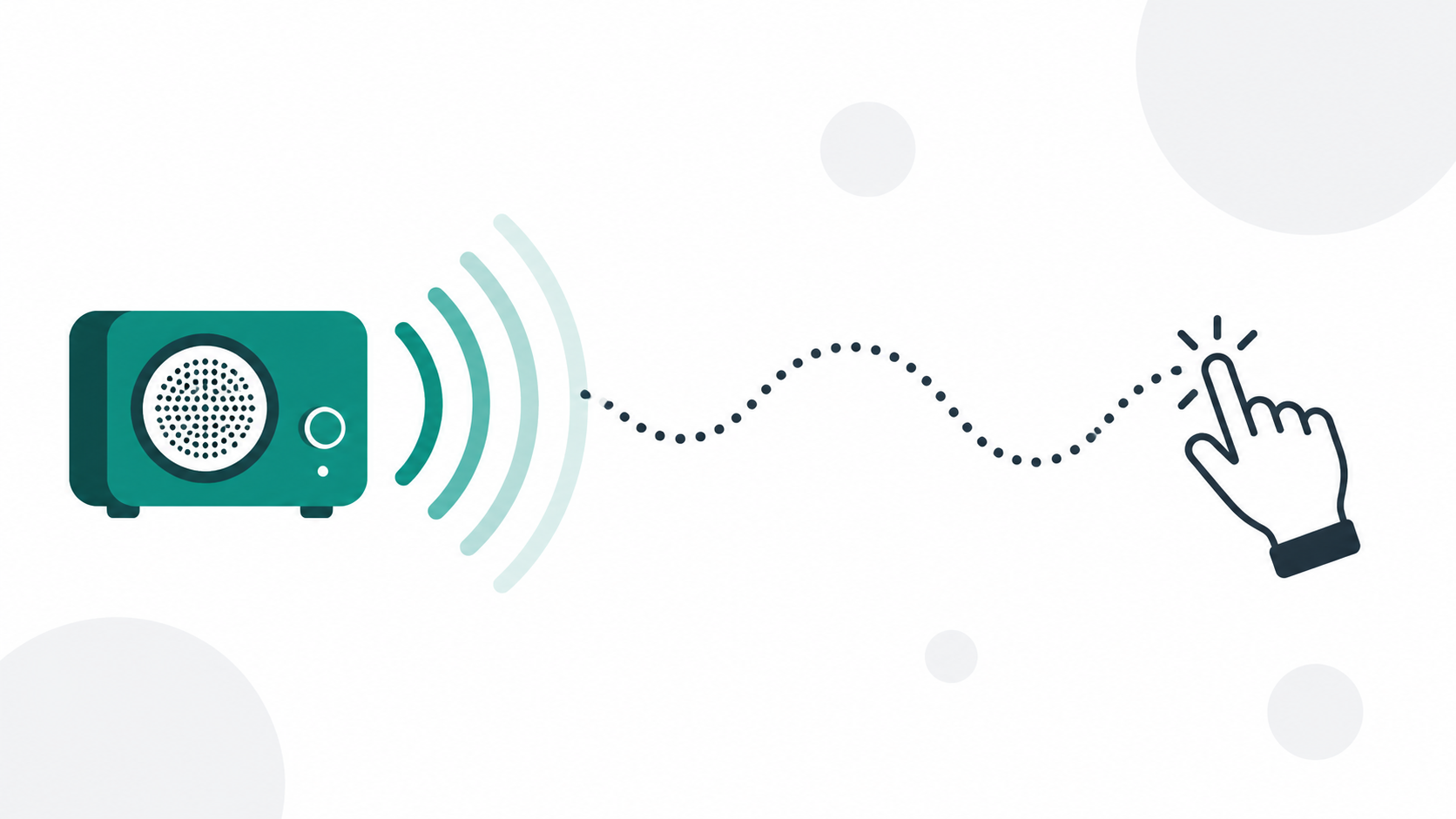
Score 10 if a listener can type it correctly on first attempt. Score 5 if common variant spellings exist and people will try them. Score 1 if you need to spell it out letter by letter to be understood.
The radio test is simple: imagine your domain mentioned on a podcast, radio ad, or in casual conversation — no URL displayed, no spelling given. Would a listener type it correctly into their browser?
Common spellability killers:
- Unconventional vowel drops ("Tumblr" works; most don't)
- Silent letters or ambiguous consonant clusters
- Homophones with more common spellings (e.g., "rite" vs "right" vs "write")
- Country-specific spelling variants (e.g., "colour" vs "color")
See the 10 most common domain name mistakes for more patterns that destroy spellability.
4. Memorability — will someone recall it 10 minutes later?
Score 10 if it sticks immediately. Score 5 if it's functional but forgettable. Score 1 if it requires deliberate effort to remember.
Memorability is driven by:
- Distinctiveness — does it sound different from everything else in the category?
- Pattern — does it use rhythm, alliteration, or a pleasing sound structure?
- Surprise — does it subvert expectations in a small, interesting way?
Test it practically: say the name once to someone who hasn't heard it, have a 10-minute conversation about something else, then ask them to recall it. This is a crude but effective proxy.
5. Brandability — does it feel like a company or a keyword?
Score 10 for invented words or real words used in genuinely unexpected contexts. Score 5 for descriptive compound words. Score 1 for exact-match keyword strings (e.g., "bestplumbingserviceslondon.com").
Brandable names are ownable. They can be trademarked. They don't describe the product so literally that they constrain the business model. And they signal ambition — they suggest a company that's building something category-defining, not just optimising for a search query.
Our guide to how to find a brandable domain name using AI covers the practical process. And our article on invented words that became billion-dollar brands demonstrates what's possible when you depart from the dictionary entirely.
Igor International, one of the world's leading naming consultancies, identifies "invented words" as the highest-value naming category precisely because of their owability and distinctiveness. A made-up word can't be confused with a competitor; it can't be diluted by generic use; and it earns full trademark protection.
6. Evocativeness — does it suggest the right feeling?
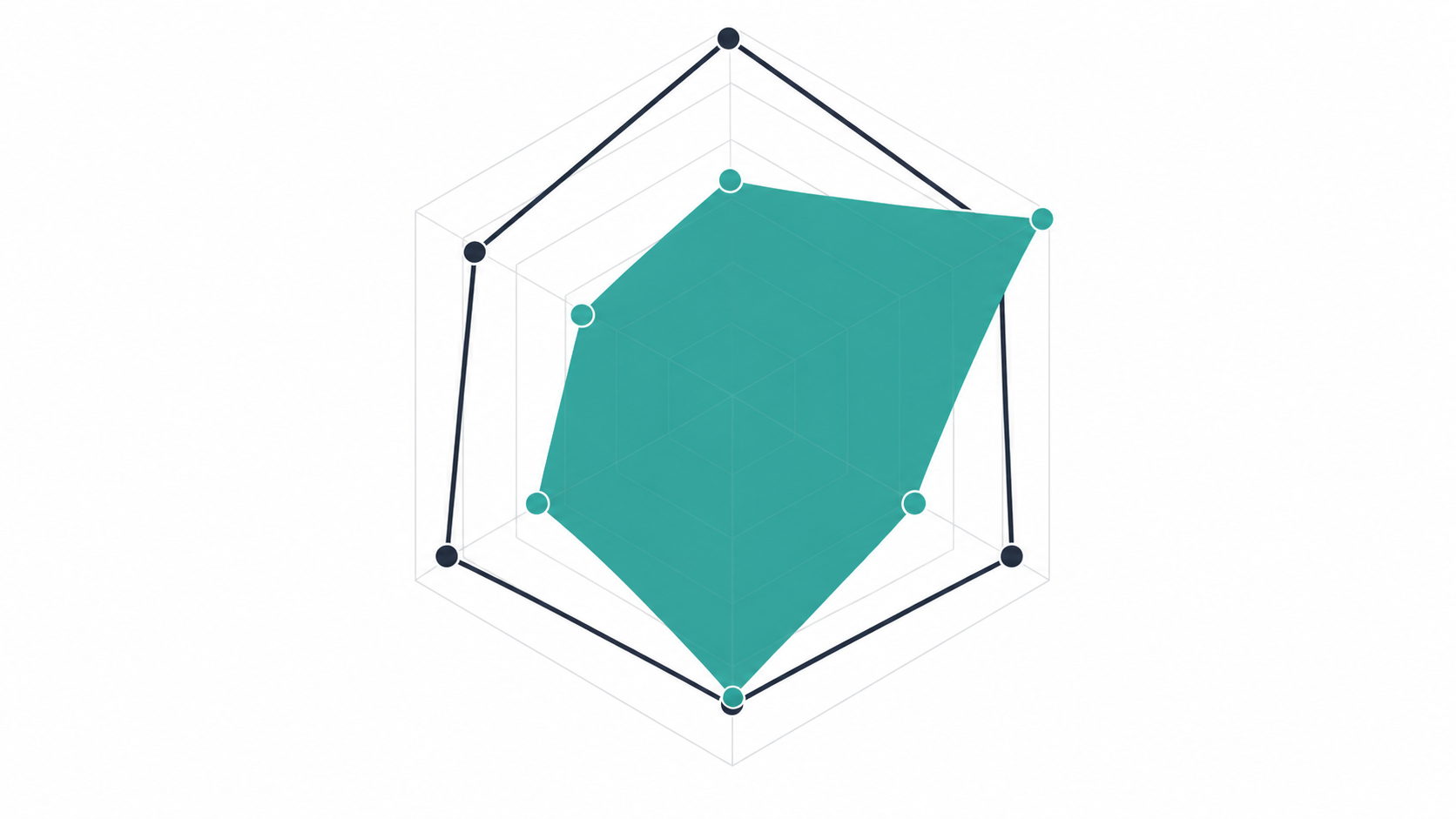
Score 10 if the name evokes the right emotion or category without being literal. Score 5 if it's neutral or category-agnostic. Score 1 if it actively suggests the wrong category.
The best names create an impression before you've seen the product. "Stripe" suggests clean lines, simplicity, and precision — perfect for a payment API. "Notion" suggests a small, useful mental unit — perfect for a note-taking tool. Neither name describes the product directly, but both point in the right direction.
The danger zone: a name that's evocative of the wrong category (a fintech named something that sounds like a gaming company) or one that sets expectations you can't meet.
7. TLD strength — does the extension reinforce or undermine trust?
Score 10 for .com. Score 8 for country-code TLDs targeting a specific national market (.co.uk, .de, .com.au). Score 6 for .io in a B2B tech context. Score 4 for .co, .net, or .org. Score 2 for uncommon or novelty TLDs that confuse people.
The .com extension remains the globally dominant trust signal. If you're building a global B2C product or raising institutional funding, the absence of a .com is a material disadvantage — not because of SEO (the evidence is weak), but because of perception.
The exception: category TLDs used with genuine specificity. A .app domain for an iOS application, a .io for a developer tool, or a country-code TLD for a nationally-focused service can all work — but they carry a higher burden of quality elsewhere in the name to compensate.
Our article on what makes a good domain name covers TLD selection in more depth.
8. Trademark clearance — is it legally ownable?
Score 10 if no conflicts exist in your category in your target markets. Score 5 if there are adjacent uses but in clearly different classes. Score 0 if the name is actively trademarked by another party in your category.
Trademark clearance is the most overlooked dimension of domain evaluation, and the most expensive to ignore. A domain you've built a brand on can be seized through legal action if you've infringed an existing mark — even if you registered the domain first.
Before committing to any name, search:
- The USPTO trademark database (US)
- The EUIPO database (EU)
- Your national trademark registry
Look for marks in the same or adjacent Nice classes to your business. If you find conflicts, the name carries legal risk regardless of how much you like it.
9. Social handle availability — can you own the full brand identity?
Score 10 if the exact handle is available on X (Twitter), Instagram, LinkedIn, and YouTube. Score 7 if it's available on 3 of 4. Score 4 if it requires a variant (prefix, suffix, or abbreviation). Score 1 if you can't get a coherent handle on any major platform.
Your domain and your social handles form a unified brand identity. Fragmentation — @getbrandname here, @brandnamehq there, @brandname_official somewhere else — creates friction and looks unfinished to customers and investors alike.
Check handle availability simultaneously with domain availability. If the handles are taken, treat it as a significant deduction even if the domain itself is strong.
10. International usability — does it travel?
Score 10 if it's pronounceable in major world languages, has no negative connotations globally, and doesn't inadvertently mean something offensive in another language. Score 5 if it's English-centric but inoffensive elsewhere. Score 1 if it has confirmed negative associations in a market you care about.
The classic cautionary tale: the Chevrolet Nova, sold in Latin America — "no va" means "doesn't go" in Spanish. The equivalent in domain names happens more than founders realise.
Minimum check: run your name through a speaker of any language that represents a significant portion of your target market and ask them what (if anything) it means or evokes.
How do the world's most iconic domains actually score?
Let's apply the scorecard to five well-known names. This is intentionally honest — great brands don't score 10 everywhere.
Google.com
| Dimension | Score | Notes |
|---|---|---|
| Length | 6 | 6 characters — optimal |
| Pronounceability | 10 | Universally pronounced the same way |
| Spellability | 9 | Minor risk of "googel" misspelling |
| Memorability | 10 | Completely distinctive, rhythmic double-o |
| Brandability | 10 | Invented word, total ownership |
| Evocativeness | 7 | Evokes scale (googol) but not immediately obvious |
| TLD strength | 10 | .com |
| Trademark clearance | 10 | Fully owned |
| Social handle availability | 10 | @google across all platforms |
| International usability | 9 | Near-universal — slight issues in some phonetic systems |
| Total | 91/100 |
Key insight: Google scores exceptionally but not perfectly. The evocativeness dimension requires knowledge of the mathematical term "googol" to land — that's a sophistication tax most brands can't afford to pay.
Stripe.com
| Dimension | Score | Notes |
|---|---|---|
| Length | 6 | 6 characters — optimal |
| Pronounceability | 10 | Unambiguous |
| Spellability | 10 | Passes radio test completely |
| Memorability | 9 | Simple, but competes with the common word |
| Brandability | 9 | Real word in unexpected context |
| Evocativeness | 9 | Suggests precision, clean lines — perfect for a payment API |
| TLD strength | 10 | .com |
| Trademark clearance | 10 | Fully owned in relevant classes |
| Social handle availability | 10 | @stripe across platforms |
| International usability | 8 | Widely understood; less evocative in non-English markets |
| Total | 91/100 |
Key insight: Stripe scores level with Google but through different strengths. It's more immediately evocative, but slightly less memorable as a standalone word because "stripe" already exists in the common lexicon.
Figma.com
| Dimension | Score | Notes |
|---|---|---|
| Length | 5 | 5 characters — excellent |
| Pronounceability | 8 | "Fig-ma" is natural; occasional "Fee-gma" from non-English speakers |
| Spellability | 9 | Clean, no common misspellings |
| Memorability | 9 | Short, rhythmically satisfying |
| Brandability | 10 | Invented word with musical connotations (figma = ornamental music notation) |
| Evocativeness | 7 | Design tool connection is non-obvious from the name alone |
| TLD strength | 10 | .com |
| Trademark clearance | 10 | Fully owned |
| Social handle availability | 10 | @figma across platforms |
| International usability | 8 | Some pronunciation variance across language groups |
| Total | 86/100 |
Key insight: Figma's low evocativeness score is the interesting anomaly. The name doesn't hint at design or collaboration — but the brand has been built so successfully that the name now carries the meaning. This is the path available to any strong invented word: build enough brand equity and the name creates its own associations.
Notion.so
| Dimension | Score | Notes |
|---|---|---|
| Length | 6 | 6 characters — optimal |
| Pronounceability | 10 | Universal |
| Spellability | 10 | Passes radio test |
| Memorability | 9 | Common word makes it slightly less distinctive |
| Brandability | 8 | Real word, good context — but not invented |
| Evocativeness | 9 | "A notion" — a small, useful idea — maps elegantly to a note-taking tool |
| TLD strength | 6 | .so (Somalia ccTLD used creatively) — not a trust signal for most users |
| Trademark clearance | 8 | Some adjacent uses existed at launch |
| Social handle availability | 9 | @notionhq on X (the handle "notion" wasn't available) |
| International usability | 8 | English word widely known; .so TLD creates confusion |
| Total | 83/100 |
Key insight: Notion's TLD is its clear weakest link. The .so extension is clever (it reads as "notion.so" → "not-ion-so" or simply "notion, so...") but it's not a trust signal, it creates domain-typing uncertainty, and @notionhq suggests they couldn't secure the exact handle. These are real costs — offset by exceptional performance on every other dimension.
Linear.app
| Dimension | Score | Notes |
|---|---|---|
| Length | 6 | 6 characters — optimal |
| Pronounceability | 10 | Unambiguous |
| Spellability | 9 | Possible "lineir" error occasionally |
| Memorability | 8 | Slightly generic — a common adjective |
| Brandability | 7 | Real English word, commonly used — lower trademark distinctiveness |
| Evocativeness | 9 | Suggests clarity, direction, and precision — perfect for a project management tool |
| TLD strength | 7 | .app is credible in developer/product context — strong niche signal |
| Trademark clearance | 7 | "Linear" is widely used; trademark clearance required careful class navigation |
| Social handle availability | 9 | @linear across most platforms |
| International usability | 8 | Widely understood across languages |
| Total | 80/100 |
Key insight: Linear's lower brandability score reflects the trade-off of using a common adjective. The evocativeness is superb — it perfectly captures the product's positioning — but the trademark clearance path was harder and the name has lower inherent distinctiveness than an invented word. The .app TLD is a smart workaround that also doubles as a product signal.
What lessons do these case studies teach?
No name is perfect. Google and Stripe both score 91/100 — with real weaknesses. Notion and Linear score in the 80s and have succeeded despite their limitations. The goal is not a perfect score; it's a score high enough that your weaknesses don't compound into material business problems.
TLD is the most common sacrifice. Three of the five companies above use a non-.com extension or would have preferred a different domain strategy. It's the dimension most often traded away because .com availability is so constrained.
Evocativeness vs brandability is a genuine tension. Names that are highly evocative (Stripe, Linear) tend to use real words, which reduces brandability and trademark strength. Names with maximum brandability (Google, Figma) sacrifice immediate evocativeness. The sweet spot — Notion — threads the needle elegantly, but such names are rare.
Social handles reveal the truth. @notionhq and @figmadesign (on some platforms) are tells that the ideal handle wasn't available. This is worth knowing before you register.
How should I use this framework when naming my business?

Use it in two ways: as a filter and as a decision tool.
As a filter: When generating name candidates, eliminate any name that scores below 5 on trademark clearance or spellability. These are binary risks — no amount of strength elsewhere compensates for a name that will generate legal exposure or confuse customers at the moment of awareness.
As a decision tool: When comparing two or three shortlisted candidates, score each dimension explicitly. Most founders discover they've been debating subjective preferences when the scorecard reveals objective trade-offs. "I prefer the sound of Option A but Option B scores 12 points higher overall because its .com is available and Option A's isn't" is a much more productive conversation.
Involve others. Test pronounceability and spellability on people outside your founding team. You've seen the name too many times to evaluate it objectively. The radio test and the 10-minute recall test both require fresh eyes (and ears).
Our guide on how to come up with a business name covers the ideation process upstream of this evaluation framework — read it if you're starting from scratch.
What role does domain authority play in SEO?
Domain authority, as defined by Moz, is a search engine ranking signal derived from the quality and quantity of inbound links to a domain. A great domain name helps earn domain authority over time by making your brand more linkable, more memorable, and more likely to be cited organically.
However, domain authority is earned, not inherent — you can't choose a domain and immediately have high authority. The naming decision affects SEO indirectly: a strong, memorable brand earns more branded searches, more unsolicited links, and more press coverage, all of which compound into authority over months and years.
Don't optimise your domain name for keyword matching (it provides negligible direct benefit and significant brandability cost). Optimise it for memorability and brand strength, and the SEO benefits follow.
The scorecard: apply it to your own domain idea
Use this table. Be honest.
| Dimension | Your Score (1–10) | Weight | Notes |
|---|---|---|---|
| Length | 1x | ||
| Pronounceability | 1x | ||
| Spellability | 1x | ||
| Memorability | 1x | ||
| Brandability | 1x | ||
| Evocativeness | 1x | ||
| TLD strength | 1x | ||
| Trademark clearance | 1x | ||
| Social handle availability | 1x | ||
| International usability | 1x | ||
| Total | /100 |
A score of 75+ is a strong domain worth registering. Below 65 means you're accepting trade-offs that will likely cost you time, money, or brand equity at some point — make that decision consciously.
How do I find domain names that score well across these criteria?
This is where the process becomes practical. Generating names that score well across all ten dimensions simultaneously is genuinely hard — most name ideas fail on at least two or three criteria before you've even checked availability.
FindMyURL uses AI to generate domain names and checks real-time availability across major domain registrars, so every suggestion you see is actually available to register right now.
Rather than brainstorming hundreds of candidates manually and checking them one by one, you can iterate rapidly — testing different styles (invented words, real-word compounds, evocative single words), filtering by length and TLD, and finding names that pass the spellability and memorability tests faster.
The FindMyURL domain generator is built for exactly this moment: when you have criteria, you have a scoring framework, and you need candidates that actually exist.
Bringing it together: the capstone principles
Everything in domain naming reduces to a small number of principles that appear in different forms across every dimension of this scorecard:
Clarity over cleverness. The cleverest name in the room fails the radio test. A name that communicates instantly — even if it's less ingenious — outperforms one that requires explanation.
Own it completely or reconsider. Trademark, social handles, and the .com extension form a unified identity. Fragmentation across any of these creates a crack that widens over time.
Evocativeness is more valuable than description. Names that suggest the right feeling without stating the function are more durable, more brandable, and more valuable than those that describe the product directly.
There is no perfect name — only honest trade-offs. Google, Stripe, and Figma all have weaknesses in the scorecard. What they share is strength across the dimensions that matter most for their specific context. Know your priorities and score accordingly.
Availability is not enough. A name being available doesn't make it good. Run the scorecard before you register. It takes 20 minutes. A rebrand costs considerably more.
For further reading on the individual dimensions covered in this article, see our guides on what makes a good domain name, how long a domain name should be, the most common domain name mistakes, and invented words that became billion-dollar brands.