To find a brandable domain name using AI, describe your business idea and desired brand personality to an AI-powered domain generator like FindMyURL. Unlike keyword-based generators, AI understands context and tone - it can generate names that feel premium, playful, technical, or minimal based on your description. The result is a shortlist of names that actually fit your brand, not just your category.
This is especially useful for searches like brandable AI domain, ai brand domain, or brandable .ai domains, where the goal is not just availability but a name that sounds credible in an AI market.
What is a brandable domain name?
A brandable domain name is one that feels like it belongs to a real company - not just a description of what the company does. It is unique, easy to say and spell, evokes the right emotional tone, and has room to grow with the business.
For AI-specific examples and .ai naming patterns, see 50 creative domain name ideas for AI startups. For extension choice, read which domain extension should I choose?.
The clearest way to see the difference is through examples:
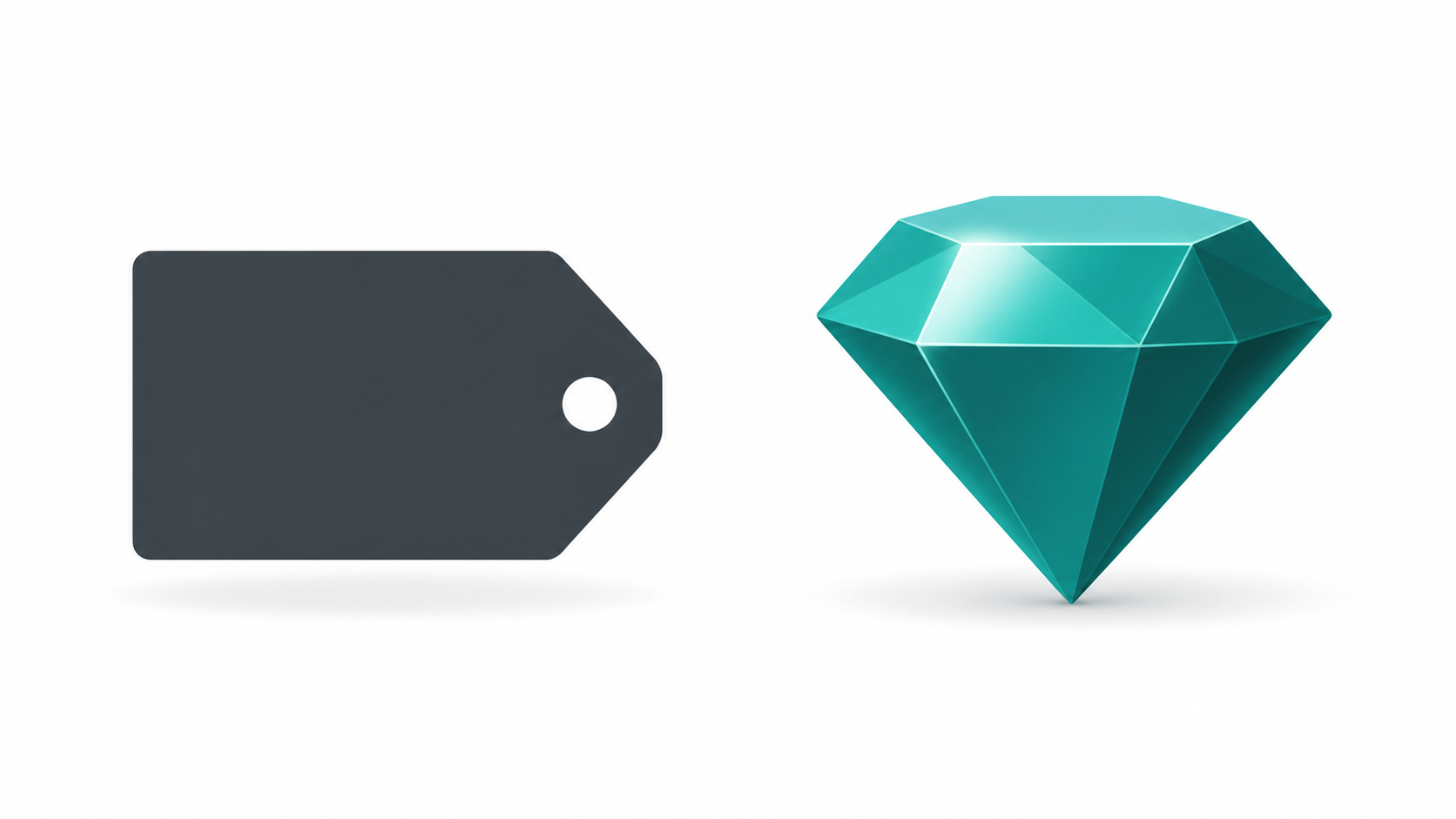
| Keyword Domain | Brandable Domain |
|---|---|
| ProjectChatApp.com | Slack.com |
| NoteOrganiser.io | Notion.com |
| PaymentProcessor.com | Stripe.com |
| OnlineMeetings.com | Zoom.com |
Slack, Notion, and Stripe share a few things in common:
- Short - typically one or two syllables
- Novel - not an existing dictionary word used generically
- Distinctive - no other company in any industry owns that word in the mind
- Scalable - the name doesn't box the company into one product or market
According to Igor International, one of the leading brand naming consultancies, the most valuable brand names are those that carry emotional weight without being descriptive. Descriptive names are easier to understand on day one but harder to protect and scale.
If you want to check whether a candidate is actually strong, use what makes a good domain name? before you register.
Why is keyword-based naming a problem for growing brands?
Keyword domains describe what a product does. That sounds sensible until the product evolves. A company called "FreelanceInvoiceTool.com" is immediately understood - and immediately limited. It cannot expand into contracts, payments, or business management without the name working against it.
Keyword domains also face practical problems:
- Trademark difficulty - generic terms are hard to protect legally
- SEO changes - exact-match domains no longer carry the ranking advantage they once did
- Crowded namespace - most useful keyword combinations on .com are taken
- Brand perception - they signal a utility rather than a company with vision
Brandable names sidestep all of these. They start as empty vessels and fill with meaning as the brand grows.
How is AI branding different from keyword domain search?
Traditional domain search works like this: you type a word, the registrar checks if it is available, and it suggests variations with hyphens, numbers, or alternative TLDs. This is keyword matching, not naming.
AI-powered naming works differently across several dimensions:
1. Context understanding You can describe your business in plain language - "a fintech app for freelancers that feels calm and trustworthy" - and the AI interprets the intent, industry, and emotional register simultaneously.
2. Word invention AI can blend, truncate, and invent words. It might combine "clarity" and "flow" into "Clairo", or draw on Latin, Greek, or invented phonemes to create something novel and ownable.
3. Tone matching AI can distinguish between names that sound premium (short, hard consonants, .com), playful (bouncy syllables, invented spelling), or technical (root words from science or mathematics). See AI domain name generators vs traditional search for a deeper comparison.
4. Scale Instead of testing ten combinations manually, AI generates hundreds of candidates in seconds - then filters them by availability.

How do you use FindMyURL to find a brandable domain name?
Here is a step-by-step walkthrough using FindMyURL as your AI domain generator.
Step 1 - Describe your business, not your category
Instead of typing "project management", try something like:
"A project management tool for creative agencies that feels minimal and calm, not corporate"
The more specific the prompt, the more targeted the output. Include:
- What the product does
- Who it is for
- What feeling or personality the brand should have
Step 2 - Review AI-generated name candidates
FindMyURL processes your description and returns a list of name suggestions. These are generated based on your brief, not pulled from a database. Each name is assessed for:
- Phonetic appeal
- Memorability
- Fit with the described tone
- Domain availability
Step 3 - Check real-time availability
This is where most naming tools fall short. Generating a great name is useless if the domain is taken.
FindMyURL uses AI to generate domain names and checks real-time availability across major domain registrars, so every suggestion you see is actually available to register right now.
Step 4 - Refine your prompt
If the first batch does not feel right, adjust the brief. Try shifting the tone:
- Add "bold and confident" for a more assertive feel
- Add "friendly and approachable" for a consumer brand
- Add "precise and technical" for a developer tool
This iterative approach to prompting is one of the most underused features of AI naming tools. Each refinement narrows the output toward something that genuinely fits.
Step 5 - Register directly
Once you find a name you want, you can register it immediately before it is taken by someone else running the same search.
What makes a domain name sound premium?
Premium-sounding domain names tend to share a consistent set of phonetic and structural traits:
- One or two syllables - Stripe, Slack, Arc, Linear
- Hard consonants - K, T, X, and R sounds convey authority and precision
- No hyphens or numbers - these signal improvisation rather than brand investment
- A .com extension - still the dominant signal of credibility, even in 2025
- Invented or rare words - nothing generic, nothing already crowded with associations
Compare "BusinessAccountingSoftware.com" with "Ledge.com". One describes a category. The other owns one.
For further reading on what separates strong domain names from weak ones, see what makes a good domain name.
Can AI really invent a brand name from scratch?
Yes - and this is one of its most valuable capabilities. Rather than rearranging existing keywords, AI can:
- Blend roots - combining "luminous" and "path" into "Lumpath"
- Truncate concepts - shortening "automatic" into "Autom" or "Atto"
- Borrow from other languages - Latin, Greek, and Nordic roots often produce short, distinctive names
- Invent phonetically - creating words that sound like they mean something without having a dictionary definition
Tools like Namelix also use this approach, generating brand names from keywords and style preferences. FindMyURL combines this with live availability checking so you move from idea to registered domain in a single session.
For startup-specific inspiration, see 50 creative domain name ideas for AI startups.
How does AI domain naming fit into the broader startup naming process?
A domain name is not the last step - it is part of the brand foundation. For founders, the naming process typically runs:
- Define the brand positioning and personality
- Generate name candidates (AI tools accelerate this dramatically)
- Filter for availability - .com first, then alternatives
- Check trademark conflicts in your target markets
- Test pronunciation and recall with real people
- Register and protect the name
AI compresses steps 2 and 3 from days of manual work into minutes. The human judgment still matters at steps 4, 5, and 6 - but the creative bottleneck is removed.
See how to find the perfect domain name for your startup for a complete walkthrough of the full process.
Where can you start finding a brandable domain right now?
The fastest way to start is to open FindMyURL, describe your business in one or two sentences, and let the AI generate names with live availability. You do not need an account to search. If you want more context on how these tools work before diving in, what is a domain name generator covers the fundamentals.
Frequently Asked Questions
What is a brandable domain name?
A brandable domain name is unique, memorable, and evokes the right emotional tone for a business without simply describing what it does. Examples include Slack, Stripe, and Notion - names that carry identity rather than category.
Can AI create a brand name for my business?
Yes. AI-powered tools like FindMyURL can generate brand name candidates by interpreting your business description, desired tone, and target audience. They can invent new words, blend existing ones, and filter results by real-time domain availability.
What makes a domain name sound premium?
Premium domain names are typically short (one or two syllables), use hard consonants, avoid hyphens and numbers, end in .com, and use invented or rare words rather than generic descriptions.
How is AI branding different from keyword domain search?
Traditional domain search matches keywords to available strings. AI branding interprets context, tone, and brand personality to generate names that fit the business emotionally and strategically - not just descriptively.
What are examples of great brandable domains?
Strong examples include Slack (team communication), Stripe (payments), Notion (productivity), Zoom (video calls), and Linear (project management). Each name is short, invented or repurposed, and carries no category baggage.