The average founder spends 3–7 hours searching for a domain name, checking options one by one on registrar websites. There is a better way: AI-powered domain generators like FindMyURL generate 50 creative, verified-available domain names in under 30 seconds based on a description of your business idea. You describe what you're building, and you get a shortlist of real, registrable domains - immediately.
What does the typical domain search actually look like?
It starts with a great idea.
You've got the concept, the energy, maybe even a rough pitch. All you need is a name - something clean, memorable, and available on .com. Simple enough, right?
So you open GoDaddy, type in the name you've been thinking about for days, and hit search.
Taken.
Fine. You try a variation. Taken. You add a word to the front. Taken. You try swapping the word order. Taken. You try a completely different name - one you're less excited about, but hey, at least it might be available.
Also taken.

This is the moment where most founders enter the domain search spiral. You start doing things you swore you wouldn't do. You add "get" to the front. You try "HQ" on the end. You consider dropping the vowels. You look at .io, then .co, then domains with hyphens, even though you know - deep down - that a hyphenated domain is a bad idea you'll regret when you're spelling it out to someone over the phone.
An hour passes. Then two. You've now checked 40–60 combinations manually, one search at a time, copy-pasting variations into a search bar and waiting for the result that tells you, again, that someone else got there first.
How much time do founders actually waste searching for domains?
More than you'd expect - and more than you can afford.
Research and community surveys across founder forums consistently show that domain name searching is one of those tasks that expands to fill the time available. What feels like "I'll just knock this out quickly" turns into an afternoon. Sometimes longer.
Here's what the time actually breaks down into:
- Brainstorming initial name ideas: 30–60 minutes
- Checking each variation manually on a registrar: 2–4 minutes per search
- Pivoting strategy after repeated failures: 30+ minutes of lateral thinking
- Evaluating weird alternatives you don't actually want: another hour
- Second-guessing yourself and starting over: priceless (and brutal)
At 40 searches across a 6-hour session, you're spending roughly 9 minutes per domain checked - and that's before accounting for the mental load of generating the next idea after each rejection.
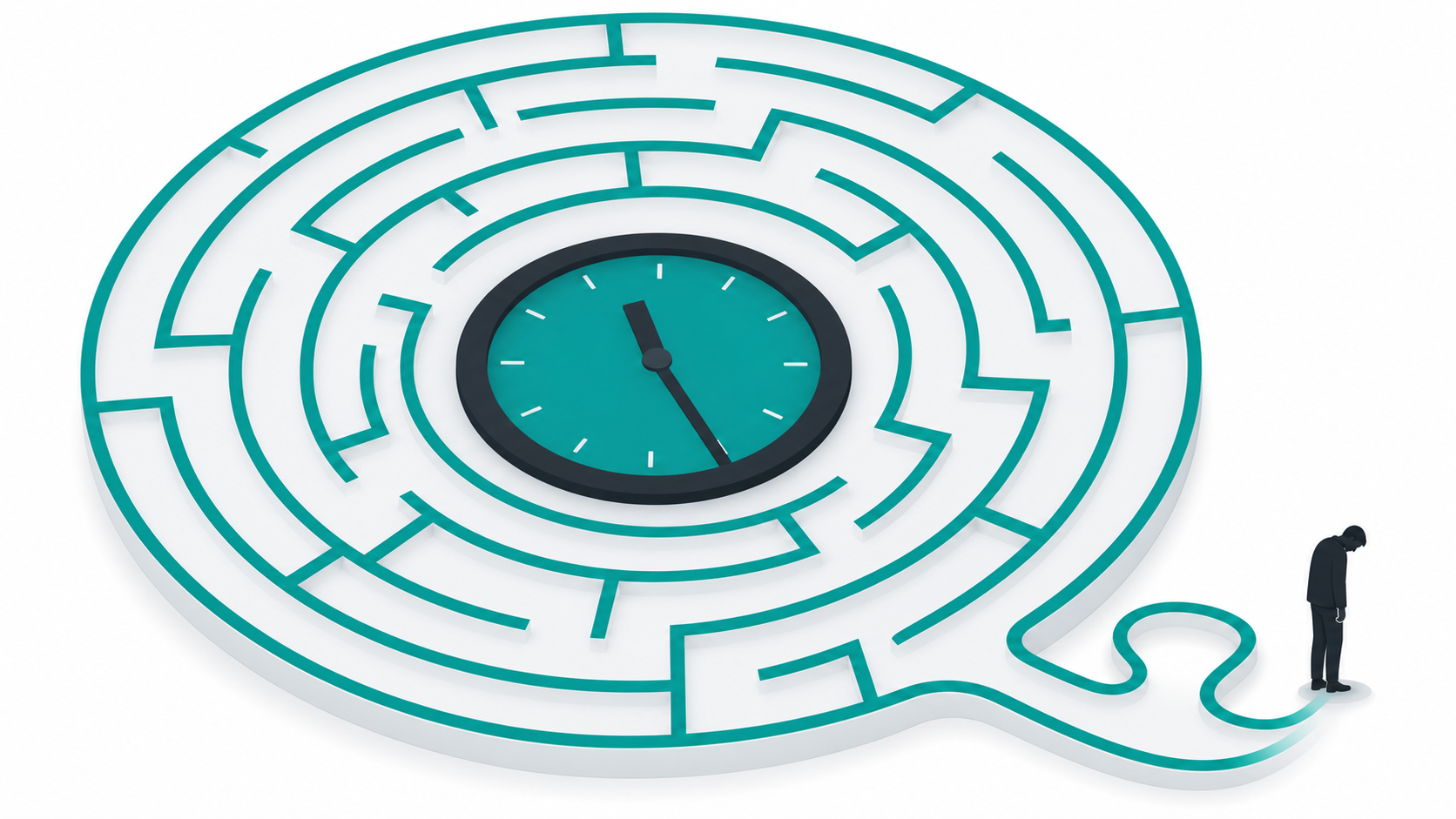
The worst part? You often end up settling. Not for the name you wanted. Not for something you're genuinely proud of. But for getmybrandnow.co or trymything2025.com - something technically functional, but that you'll wince at every time someone asks for your website address.
If you've been through this, you already know. If you haven't yet, you will - unless you do something differently.
Why is finding a good domain name so hard?
The honest answer: because you're competing with 350+ million registered domains.
There are roughly 350 million registered domain names globally, and the .com namespace has been accumulating registrations since 1985. Virtually every common English word, every obvious brand name combination, and every clean two-word pairing has already been registered - either by an active business, a domain squatter, or a speculator waiting for the right buyer.
This isn't a new problem. It's getting harder every year.
We've written a deeper piece on exactly this: Why is every good domain name already taken? - which walks through the economics and history of domain scarcity in detail.
The short version: the registrar search bar was designed to check one domain at a time. It was never built for creative discovery. It's a lookup tool, not an ideation tool - and that's the root of the problem.
What's the alternative to checking domains one by one?
Describe your business idea and get 50 verified options in 30 seconds.
This is what AI-powered domain search tools are built for. Instead of typing a single guess and hoping, you describe what your business does - a sentence or two - and the tool generates a broad set of creative, brandable domain name candidates. Then, critically, it checks real-time availability on your behalf before showing you the results.
FindMyURL uses AI to generate domain names and checks real-time availability across major domain registrars, so every suggestion you see is actually available to register right now.
That distinction matters enormously. A list of creative suggestions is only useful if those suggestions are actually available. With traditional registrar search, you generate an idea, check it, get rejected, generate another idea, check it, get rejected - and repeat. With FindMyURL, the generation and availability-checking happen simultaneously, in bulk, before you see a single result.
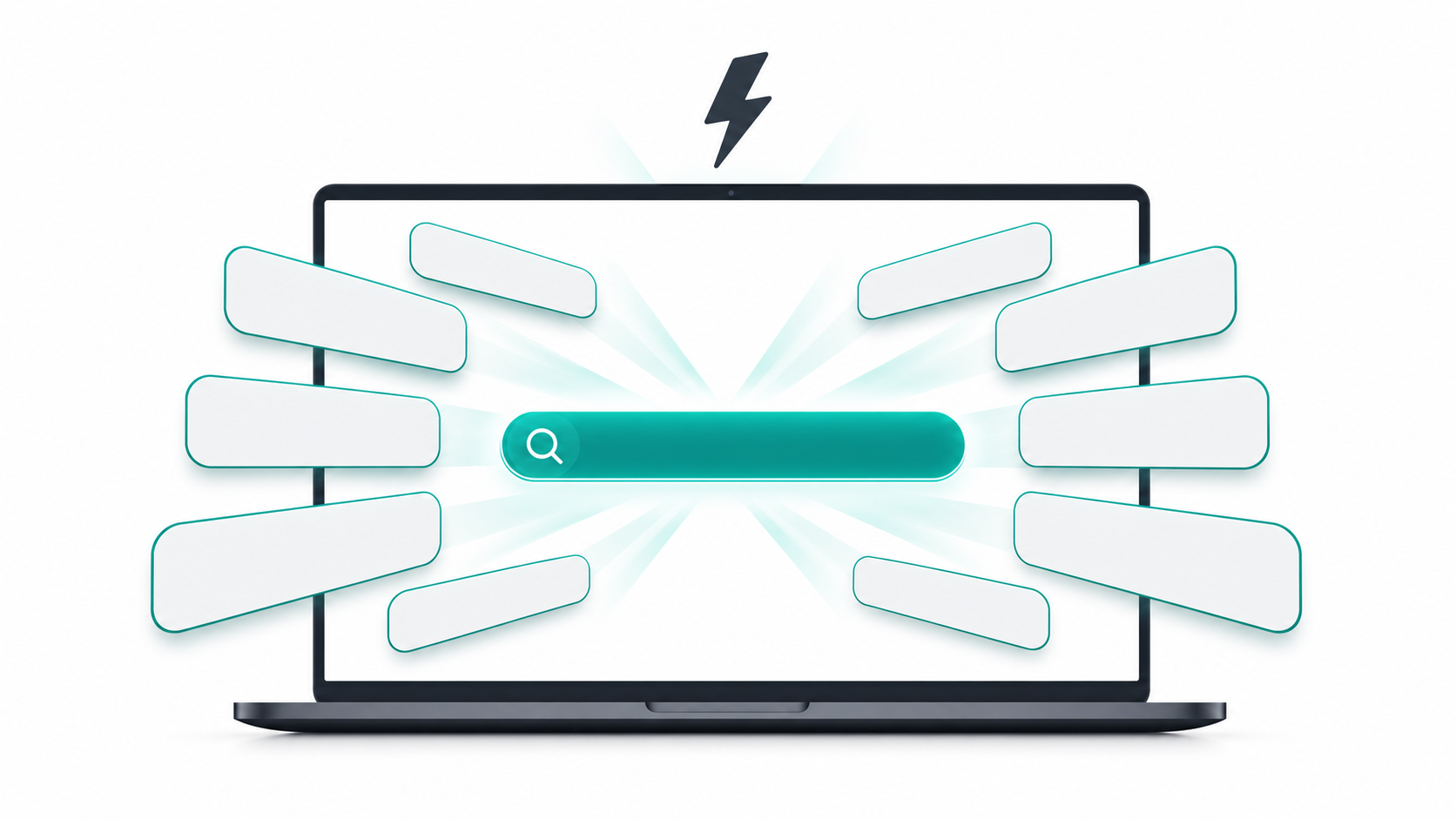
The workflow looks like this:
- Go to FindMyURL
- Describe your business in plain language - what it does, who it's for, what feeling or tone you want
- Get 50 domain name suggestions, all verified available, in under 30 seconds
- Pick the one you like best
- Register it and move on
That's it. The contrast with a 6-hour manual search is stark - and intentional.
For a broader look at how this compares to traditional registrar search specifically, see FindMyURL vs GoDaddy domain search.
How do AI domain generators check availability in real time?
They query registrar databases live, not from a cached list.
This is an important technical point worth understanding. Some domain name tools show you suggestions based on a static list or historical data - which means a domain they show as "available" might already be registered. Stale data is a real problem in this space.
FindMyURL checks availability in real time against current registrar data, which means the 50 suggestions you see are genuinely available at the moment you search. You won't click through to register a domain and find it's already gone.
For a step-by-step explanation of how domain availability checking actually works, see How to check if a domain name is available.
How do you actually find the right domain name, not just any available one?
The goal isn't just availability - it's a name that fits.
This is where the AI generation piece matters beyond just speed. A good domain name generator doesn't just find available strings of characters. It generates names that are:
- Brandable - memorable, pronounceable, and distinctive
- Relevant - connected to what your business actually does
- Clean - no hyphens, no numbers, ideally under 15 characters
- Intuitive - something a person could hear once and spell correctly
When you describe your business to FindMyURL in natural language - "a platform that helps freelancers track invoices and chase late payments" - the AI uses that context to generate names that are meaningfully related to the idea, not just random word combinations.
This is the difference between a tool that finds domains and a tool that helps you find your domain. We've written a full guide on this: How to find the perfect domain name for your startup.
How does FindMyURL compare to other domain name generators?
There are several tools in this space - and they vary significantly in approach.
Some generators produce random combinations. Some check availability slowly or against outdated data. Some show you hundreds of options with no curation, which creates a different kind of overwhelm. Some require you to already have a name in mind rather than starting from a description.
We've compared the major options in detail here: Best domain name generators in 2026.
The key differentiators for FindMyURL are the combination of AI-generated names from a natural language brief, real-time availability checking, and a curated set of results - 50 options, not 500. Enough to give you genuine choice without triggering decision paralysis.
What should you do after you find a domain you like?
Register it immediately - domain availability can change within hours.
Popular or desirable domain names don't stay available indefinitely. Once you've found something you're happy with, the right move is to register it straight away. Waiting until tomorrow to "think it over" carries real risk.
After registration, the next steps are typically:
- Set up email hosting (so you have a professional address at your domain)
- Connect to your website builder or hosting provider
- Configure DNS settings
- Consider registering common variations (
.co,.net, common misspellings) to protect your brand
The domain is the beginning, not the end. Which brings us to the point worth stating plainly:
The bottom line
Six hours searching for a domain name is six hours not spent on product, customers, or anything that actually moves your business forward. The friction is real, but it's no longer necessary.
Describe your idea. Get 50 verified options in 30 seconds. Pick your favourite. Register it.

Your time is better spent building the actual business.
→ Find your domain on FindMyURL
Frequently Asked Questions
How long does it take to find a domain name?
The average founder spends 3–7 hours searching for a domain name manually using registrar search tools, checking one option at a time. Using an AI-powered domain generator like FindMyURL reduces this to under 30 seconds - you describe your business, and the tool returns 50 verified-available domain names instantly.
Why is finding a domain name so hard?
Finding a domain name is hard because over 350 million domains are already registered globally. Most common words, brand names, and clean two-word combinations have been taken - often by active businesses, domain squatters, or speculators. The traditional registrar search bar checks one option at a time, which makes creative discovery slow and frustrating.
What is the fastest way to find a domain name?
The fastest way to find a domain name is to use an AI-powered domain generator. Describe your business idea in plain language, and the tool generates a set of creative, brandable domain names and checks their availability in real time - all in under 30 seconds. FindMyURL returns 50 verified-available options from a single search.
How many domains should I check before deciding?
There is no fixed number, but most founders benefit from reviewing 20–50 curated options rather than hundreds of random suggestions. Too few limits your choices; too many causes decision paralysis. FindMyURL is designed to return exactly 50 verified-available names per search - enough genuine choice without overwhelming you.
Is there a tool that finds available domains automatically?
Yes. FindMyURL uses AI to generate domain names and checks real-time availability across major domain registrars, so every suggestion you see is actually available to register right now. You describe your business, and the tool handles both the creative generation and the availability checking simultaneously.