Should You Use a Subdomain or a Subfolder? What the Data Says
For SEO, subfolders (domain.com/blog) are generally better than subdomains (blog.domain.com). Google treats subfolders as part of the same site, meaning every link and signal your content earns strengthens your root domain. Subdomains are treated more like separate sites, so authority doesn't flow as freely. Google officially says it handles both the same way — but case studies consistently tell a different story.
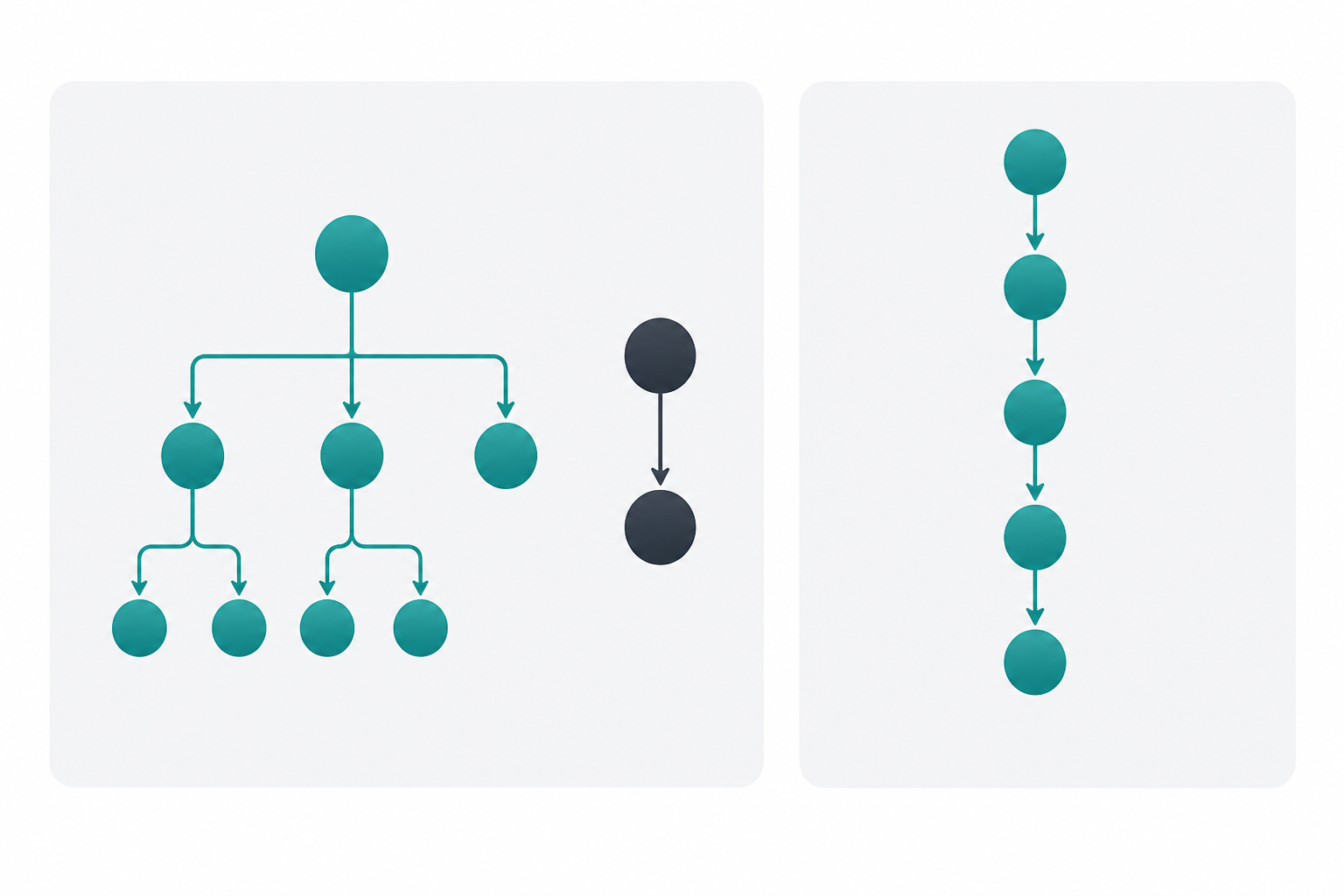
What Is the Difference Between a Subdomain and a Subfolder?
Before the debate, the definitions:
Subdomain: A prefix added before your root domain.
blog.domain.com — Google can treat this as a distinct website from domain.com.
Subfolder (also called a subdirectory): A path added after your root domain.
domain.com/blog — Google treats this as part of the same website as domain.com.
Both are valid ways to organise content. The difference lies in how search engines interpret site boundaries — and that has real consequences for how authority, rankings, and traffic accumulate.
| Structure | Example URL | How Google Sees It |
|---|---|---|
| Subdomain | blog.domain.com |
Potentially a separate site |
| Subfolder | domain.com/blog |
Part of the same site |
| Root domain | domain.com |
The primary entity |
What Does Google Officially Say About Subdomains vs Subfolders?
Google's official position, stated repeatedly by former Search Advocate John Mueller, is that Googlebot can crawl and index both equally well, and that the choice shouldn't materially affect rankings.
From Google Search Central: Google can associate subdomains with their root domain and consolidate signals when it understands they belong to the same entity.
But "can" is doing a lot of work in that sentence.
The practical reality is that Google's ability to associate a subdomain with its parent domain is not guaranteed. It depends on crawl frequency, link relationships, and how clearly the two properties are connected — factors entirely outside your control.
What Does the Real-World Data Show?
This is where the official position and observed outcomes diverge.
The Moz migration study remains one of the most cited examples. When Moz moved their blog from moz.com/blog (subfolder) to a subdomain, they experienced a measurable drop in organic traffic. Moving it back recovered that traffic. The pattern has been replicated across multiple sites.
Ahrefs case studies (Ahrefs Blog) have documented similar patterns: sites migrating content from subdomains to subfolders frequently see ranking improvements, particularly for competitive keywords where domain authority is a significant ranking factor.
The common finding across studies:
- Links pointing to
blog.domain.combuild authority for the subdomain, notdomain.com - Links pointing to
domain.com/blogbuild authority fordomain.com— which then helps every page on the site - Subfolders tend to rank faster for new content because they inherit the root domain's trust

Why Do Subfolders Tend to Outperform Subdomains for SEO?
The mechanism comes down to how PageRank and domain authority flow through a site.
When an external website links to domain.com/blog/your-article, that link passes authority to the root domain (domain.com) and to the article itself. Every page on your site benefits marginally from that external signal.
When an external website links to blog.domain.com/your-article, that link primarily benefits the subdomain. The root domain may receive some indirect benefit — but it's not as clean or consistent.
Think of it this way:
- Subfolders = one bank account. Every deposit strengthens the balance for everyone.
- Subdomains = two bank accounts. Deposits go into whichever account they're addressed to.
For most businesses building a single brand, keeping everything in one account is the smarter strategy.
When Does a Subfolder Win Every Time?
Subfolders are the right call whenever your goal is search visibility and authority consolidation:
- Blogs and content hubs —
domain.com/blog - Help centres and documentation —
domain.com/help - Resource libraries —
domain.com/resources - Case studies and portfolio pages —
domain.com/case-studies - Landing pages for campaigns —
domain.com/offer
In every one of these cases, the content exists to attract links, rank in search, and support your main domain's authority. Putting that content on a subdomain splits that effort.
When Does a Subdomain Actually Make Sense?
Subdomains are not always wrong. There are legitimate technical and strategic reasons to use them:
Separate products or platforms
If you're running a SaaS app at app.domain.com and a marketing site at domain.com, they may genuinely be different technical environments (different servers, CMS, or codebases). Forcing them into a subfolder structure can create unnecessary complexity.
Completely different audiences
A company selling to both consumers and enterprise clients with radically different needs might separate enterprise.domain.com from the main site without meaningful SEO cost, since they're targeting different keywords and personas anyway.
International and language sites
fr.domain.com or de.domain.com is a common and accepted pattern for international targeting — though domain.com/fr/ is equally valid and some SEOs prefer it.
Login portals and dashboards
dashboard.domain.com or account.domain.com rarely needs to rank in search. These pages exist behind authentication, not in search results. The subdomain friction doesn't matter when SEO isn't the goal.
The core question to ask: Does this content need to rank and build authority? If yes, use a subfolder. If it exists for functional or technical reasons unrelated to search, a subdomain is fine.

Should My Blog Be on a Subdomain or a Subfolder?
Use a subfolder. This is the clearest practical recommendation in the subdomain vs subfolder debate.
domain.com/blog outperforms blog.domain.com in the vast majority of documented cases. Your blog is one of your best link-earning assets — it attracts backlinks, earns social shares, and builds topical authority. All of that value should consolidate on your root domain.
The only reason to put a blog on a subdomain is if your CMS or technical setup makes a subfolder genuinely impossible — which is rare with modern platforms including WordPress, Webflow, Ghost, Contentful, and most headless CMS options.
How Does This Affect Choosing and Setting Up Your Domain?
If you're setting up a new site, your structure decisions start at the domain level. A few things worth considering:
Get your root domain right first. Your domain name is the foundation everything else is built on. A strong, memorable domain makes subfolder paths easier to share and remember. See our guide on what makes a good domain name for the principles that hold regardless of what you're building.
Understand that domain authority is cumulative. The SEO work you put into subfolder content compounds on the same root. This makes the domain you choose at the start more consequential than it might seem. Read more in does your domain name affect SEO?
If you're already on a subdomain, migration is possible. Moving from
blog.domain.comtodomain.com/blogcan be done with proper 301 redirects without destroying your rankings. It takes planning, but the long-term SEO gain is typically worth it. Our guide on how to change your domain name without destroying your SEO covers the redirect framework in detail.
FindMyURL uses AI to generate domain names and checks real-time availability across major domain registrars, so every suggestion you see is actually available to register right now.

What Is the Practical Recommendation?
Default to subfolders for anything that needs to rank.
Use subdomains only when there's a genuine technical, product, or audience reason that outweighs the SEO cost — and go in knowing that the content on that subdomain is building its own authority separately from your root domain.
If you're starting fresh, structure your site with subfolders from day one. Retrofitting this later is entirely possible, but it requires careful migration work. Building it right at the start is considerably easier.
For domain name ideas that give you a strong foundation to build on, try FindMyURL — AI-generated names with live availability checking across major registrars.
Frequently Asked Questions
{
  "@context": "https://schema.org",
  "@type": "FAQPage",
  "mainEntity": [
    {
      "@type": "Question",
      "name": "Is a subdomain or subfolder better for SEO?",
      "acceptedAnswer": {
        "@type": "Answer",
        "text": "Subfolders are generally better for SEO. Because Google treats subfolders as part of the same site, links and authority earned by subfolder content strengthen the root domain. Subdomains can be treated as separate sites, meaning authority doesn't flow as freely back to the main domain."
      }
    },
    {
      "@type": "Question",
      "name": "Does Google treat subdomains differently from subfolders?",
      "acceptedAnswer": {
        "@type": "Answer",
        "text": "Google officially says it treats both equally, but real-world case studies consistently show subfolders outperforming subdomains for ranking and authority consolidation. Google can associate subdomains with their root domain, but this isn't guaranteed and depends on factors outside your control."
      }
    },
    {
      "@type": "Question",
      "name": "Should my blog be on a subdomain or subfolder?",
      "acceptedAnswer": {
        "@type": "Answer",
        "text": "Your blog should be on a subfolder — for example, domain.com/blog rather than blog.domain.com. Your blog earns backlinks and builds topical authority. Placing it on a subfolder means all of that authority benefits your root domain directly, improving rankings site-wide."
      }
    },
    {
      "@type": "Question",
      "name": "What is the difference between a subdomain and a subdirectory?",
      "acceptedAnswer": {
        "@type": "Answer",
        "text": "A subdomain is a prefix before your root domain, such as blog.domain.com. A subdirectory (or subfolder) is a path after your root domain, such as domain.com/blog. The key difference is how search engines interpret site boundaries: subfolders are clearly part of the same site, while subdomains can be treated as separate entities."
      }
    },
    {
      "@type": "Question",
      "name": "Can I move from a subdomain to a subfolder?",
      "acceptedAnswer": {
        "@type": "Answer",
        "text": "Yes. Migrating from a subdomain to a subfolder is possible using 301 redirects, which pass link equity from the old URLs to the new ones. Done correctly, this migration can improve SEO over time. It requires careful planning to avoid ranking drops during the transition."
      }
    }
  ]
}