What to Do If Your Domain Name Is Taken by a Cybersquatter
If your business name domain is held by a cybersquatter, you have three options: buy it from them (negotiate directly or via a broker), file a UDRP complaint through ICANN (costs $1,500–$4,000 and takes 2–3 months), or move on and build brand equity on a creative alternative. For most startups, generating a new name with an AI tool is faster, cheaper, and less stressful than pursuing legal action.
What Is Cybersquatting and Is It Illegal?
Cybersquatting is the deliberate registration of a domain name — usually a brand name, trademark, or personal name — with the intent to profit from someone else's goodwill. The squatter either resells the domain at an inflated price, uses it to divert traffic, or holds it ransom.
In the United States, cybersquatting is illegal under the Anticybersquatting Consumer Protection Act (ACPA), passed in 1999. Internationally, it violates ICANN's Uniform Domain-Name Dispute-Resolution Policy (UDRP), which provides a faster, cheaper alternative to federal litigation.
Key signs you're dealing with a cybersquatter rather than a legitimate owner:
- The domain is parked with no real content or business
- You receive a reply-to-inquiry price of $10,000+
- The domain was registered shortly after your brand became public
- The registrant has a history of holding multiple unrelated domains for resale
Cybersquatting is distinct from domain investing, where investors speculatively register generic dictionary words or common phrases. Squatters specifically target your brand.
How Do I Get a Domain Name Back from a Squatter?
You have three viable paths. The right one depends on your budget, timeline, and whether you hold a registered trademark.
Option 1: Negotiate and Buy the Domain
The fastest resolution is often just buying the domain outright. Squatters want money — that's the point. Your leverage depends on whether you have a trademark and how badly you need that specific domain.
Going in cold (direct outreach):
- Use the WHOIS record or the domain's contact form to reach the registrant
- Start low — offer $500–$1,500 to gauge their floor
- Avoid revealing your company name or that you have funding; squatters adjust their price accordingly
- Use a personal email or a neutral alias, not your branded company address
Using a domain broker: Brokers like Sedo act as intermediaries who negotiate anonymously on your behalf. This protects your identity and often produces better outcomes. Broker fees typically run 10–15% of the final sale price.
Broker-assisted acquisition makes sense when:
- The domain is clearly worth fighting for long-term
- You can't risk tipping off the squatter to your identity or valuation
- The asking price is above $5,000 and you want professional negotiation

Option 2: File a UDRP Complaint
If negotiation fails or the asking price is extortionate, a UDRP complaint is the formal legal mechanism for reclaiming a domain without going to court.
Option 3: Find a Better Domain
If the domain isn't essential to your brand identity — or if you're early-stage and haven't launched yet — generating a fresh, available domain is often the smartest move. More on this below.
What Is a UDRP Complaint and How Does It Work?
The Uniform Domain-Name Dispute-Resolution Policy (UDRP) is an ICANN-administered process that allows trademark holders to challenge abusive domain registrations without filing a lawsuit.
The Three-Part UDRP Test
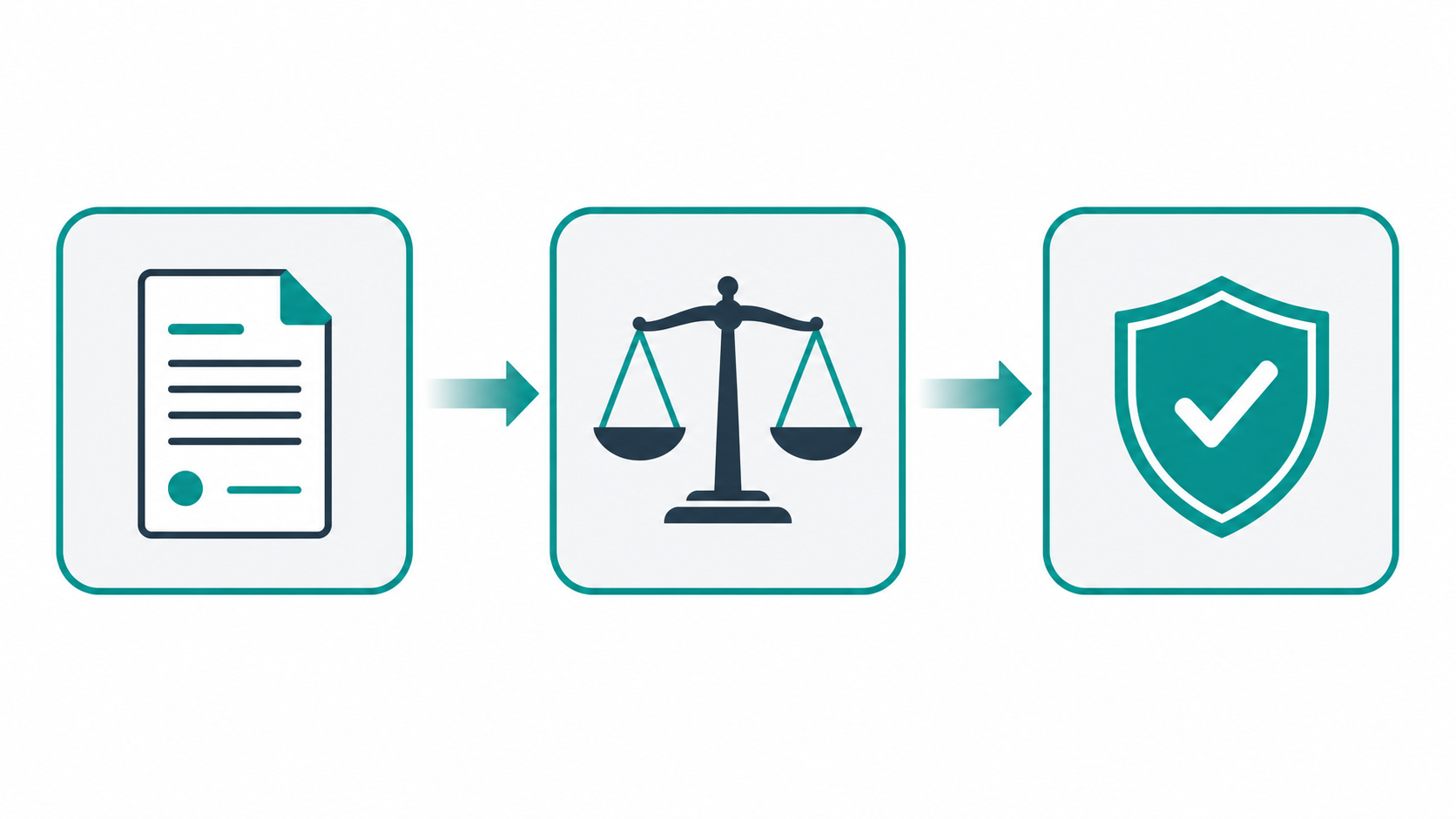
To win a UDRP case, you must prove all three of the following:
- The domain is identical or confusingly similar to your trademark — This is usually straightforward if you have a registered trademark.
- The registrant has no legitimate rights or interests in the domain — They're not commonly known by that name, not using it for a bona fide business, etc.
- The domain was registered and is being used in bad faith — Evidence includes: offering to sell it for above cost, pattern of registering others' trademarks, or actively misleading users.
How to File a UDRP Complaint
Step 1: Choose an approved dispute resolution provider. The two largest are:
- WIPO Arbitration and Mediation Center — the most commonly used
- Forum (formerly NAF)
Step 2: Prepare your complaint. You'll need:
- Proof of trademark ownership (registered or common law)
- Evidence of bad faith (correspondence, parking page screenshots, asking price)
- Documentation showing the domain is confusingly similar to your mark
Step 3: Pay the filing fee and submit. WIPO and Forum both have online filing systems.
Step 4: The registrant gets 20 days to respond. If they don't, you win by default.
Step 5: A panel of 1–3 arbitrators reviews the case and issues a decision, typically within 14 days of the panel being appointed.
UDRP: Key Facts and Figures
| Factor | Detail |
|---|---|
| Cost | $1,500–$4,000 (single panelist vs. three-panelist panel) |
| Timeline | Approximately 2–3 months end-to-end |
| Complainant win rate | ~70% of decided cases |
| Outcome if you win | Domain transferred to you or cancelled |
| Appeals | Losing party can still file in a court of law |
| No trademark required? | Common law trademark rights are accepted, but harder to prove |
When Is Filing a UDRP Actually Worth It?
UDRP is a strong tool, but it's not always the right one. It's worth pursuing when:
- You hold a registered trademark — Your win rate increases substantially with a federal or international trademark registration
- Bad faith is clear and documented — The squatter contacted you with an inflated price, or the domain was registered the day after your press coverage
- The domain is your exact brand name — Generic or descriptive domains are much harder to reclaim under UDRP
- The domain is critical to your business — You've already built brand recognition around it, have marketing materials printed, or customers are actively searching for it
UDRP is probably not worth it when:
- You're pre-launch with no trademark and flexible on naming
- The domain is a common word or phrase with legitimate uses
- The squatter's asking price is less than legal fees
- You could rebrand for less than $4,000 in total cost
What Are the Best Negotiation Tactics When Dealing with a Domain Squatter?
If you decide to negotiate, approach it strategically.
Do:
- Research comparable domain sales on Sedo or Namebio before opening an offer
- Make your first offer 10–20% of your actual ceiling to leave room to move
- Use a broker or a neutral intermediary to protect your identity
- Set a firm walk-away price before you start and stick to it
- Ask for an escrow service (Escrow.com is standard) to protect both parties in the transaction
Don't:
- Contact them from your company email address
- Reveal that you've raised funding or have revenue
- Negotiate emotionally — squatters are experienced and will exploit urgency
- Accept verbal agreements — get everything in writing through the escrow process
If a squatter quotes you $50,000 and you were prepared to pay $3,000, it's almost certainly cheaper to find an alternative domain than to close that gap.
Is It Better to Fight a Squatter or Just Find a New Domain?
For most early-stage startups, finding a new domain is the pragmatic answer.
Here's why:
- UDRP takes 2–3 months minimum. You could launch on a new domain in 24 hours.
- Legal costs of $1,500–$4,000 can fund your first paid acquisition campaign instead.
- Brand equity is built, not inherited. Thousands of successful companies launched on non-obvious domains and built household names regardless — Stripe, Lyft, Figma, Notion.
- Creative alternatives often outperform the obvious choice. A unique, memorable name is a marketing asset.
The question isn't "how do I get that domain?" It's "what domain gives my business the best foundation?"

FindMyURL uses AI to generate domain names and checks real-time availability across major domain registrars, so every suggestion you see is actually available to register right now.
Instead of spending months in arbitration or thousands on a broker, you can describe your business in a sentence and get a list of creative, brandable, available domain names in seconds. Most founders find a name they genuinely prefer to the one the squatter was holding.
Related reading:
- Why is every good domain name already taken?
- How to find a brandable domain name using AI
- How to pick a business name when every domain is taken
- How to check if a domain name is available
Quick-Reference: Which Path Should You Take?
| Your Situation | Recommended Action |
|---|---|
| Registered trademark + clear bad faith + domain is your exact brand | File UDRP |
| No trademark, early-stage, flexible on name | Use AI to find a new domain |
| Squatter asking $2,000–$5,000, domain is critical | Negotiate directly or via broker |
| Squatter asking $20,000+, you have no trademark | Find an alternative |
| Domain registered same week as your PR launch | Strong UDRP candidate |
| Generic word domain held by investor | UDRP unlikely to succeed — negotiate or move on |
Try FindMyURL
If you're ready to move forward on a domain you can actually register today, try FindMyURL. Describe your business, get AI-generated name ideas with real-time availability, and register in minutes.
Frequently Asked Questions
{
  "@context": "https://schema.org",
  "@type": "FAQPage",
  "mainEntity": [
    {
      "@type": "Question",
      "name": "What is cybersquatting and is it illegal?",
      "acceptedAnswer": {
        "@type": "Answer",
        "text": "Cybersquatting is the deliberate registration of a domain name — typically a brand name or trademark — with the intent to profit by reselling it to the rightful owner. In the United States, it is illegal under the Anticybersquatting Consumer Protection Act (ACPA). Internationally, it is addressed through ICANN's Uniform Domain-Name Dispute-Resolution Policy (UDRP), which provides an arbitration process to reclaim abusively registered domains."
      }
    },
    {
      "@type": "Question",
      "name": "How do I get a domain name back from a squatter?",
      "acceptedAnswer": {
        "@type": "Answer",
        "text": "You have three options: negotiate directly with the registrant or use a domain broker like Sedo to buy the domain; file a UDRP complaint through ICANN's approved providers such as WIPO (costs $1,500–$4,000, takes 2–3 months, ~70% win rate for complainants); or find an alternative domain name. For early-stage businesses without a registered trademark, finding an alternative using an AI domain name generator is often the fastest and most cost-effective route."
      }
    },
    {
      "@type": "Question",
      "name": "What is a UDRP complaint?",
      "acceptedAnswer": {
        "@type": "Answer",
        "text": "A UDRP (Uniform Domain-Name Dispute-Resolution Policy) complaint is a formal arbitration process administered by ICANN-approved providers like WIPO and Forum. It allows trademark holders to challenge abusive domain registrations without going to court. To win, you must prove the domain is identical or confusingly similar to your trademark, the registrant has no legitimate rights to it, and it was registered and is being used in bad faith. Successful complainants have the domain transferred to them or cancelled."
      }
    },
    {
      "@type": "Question",
      "name": "How much does it cost to fight a domain squatter?",
      "acceptedAnswer": {
        "@type": "Answer",
        "text": "A UDRP complaint costs between $1,500 and $4,000 in filing fees depending on whether you use a single arbitrator or a three-member panel. If you hire a domain attorney to prepare your case, total costs can reach $5,000–$10,000. Buying the domain directly from a squatter varies widely — from a few hundred dollars to tens of thousands. Using a domain broker typically adds a 10–15% commission on the final sale price."
      }
    },
    {
      "@type": "Question",
      "name": "Is it better to fight a squatter or find a new domain?",
      "acceptedAnswer": {
        "@type": "Answer",
        "text": "For most early-stage startups, finding a new domain is faster, cheaper, and strategically smarter. UDRP takes 2–3 months and costs $1,500–$4,000 minimum — and that's only if you have a registered trademark and clear evidence of bad faith. A new, brandable domain can be found and registered in minutes. Brand equity is built through marketing and product quality, not inherited from a domain name. Many of the world's most recognised brands launched on non-obvious domains."
      }
    }
  ]
}